
You have been running snaps all morning. The machine feels warm. Then hot. Then too hot to touch near the cylinder or the motor.
You keep running. Because the order has to ship.
Then the machine stops. Or the snaps start coming out wrong. The cylinder seals failed. The motor burned out. The valve stuck.
Heat kills machines. Slowly at first. Then all at once.
Here is why snap button machines overheat and what to do about it.
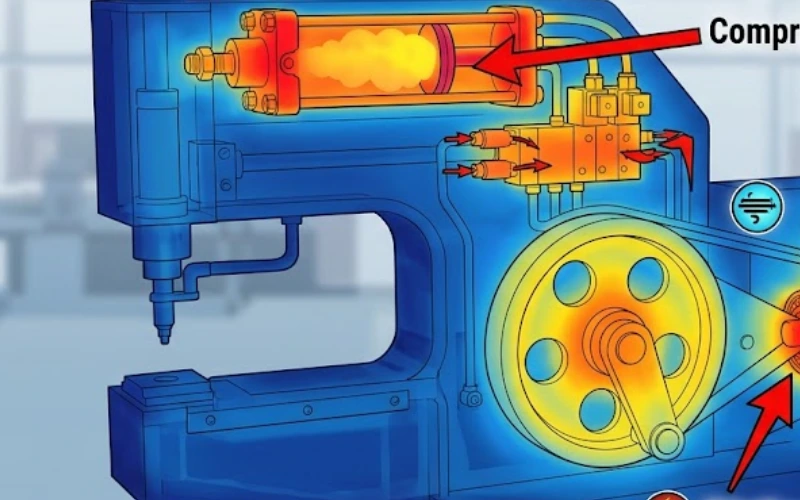
Where the Heat Comes From
Every cycle creates heat. Friction. Air compression. Electrical resistance. It adds up.
On pneumatic machines: Compressing air generates heat. The cylinder gets warm. The valve gets warm. Run 2000 cycles per hour and the heat has nowhere to go.
On mechanical machines: The motor runs constantly. The flywheel spins. Bearings create friction. The clutch engages and disengages. Heat builds up in the motor and the moving parts.
On automatic machines: The vibratory bowl has its own motor. That motor runs all day. The bowl gets warm. The electronics generate heat.
Heat is normal. Overheating is not.
Signs Your Machine Is Overheating
Do not wait for the machine to stop. Watch for these signs.
The cylinder or motor housing is too hot to hold your hand on. Warm is fine. Hot enough to burn is not.
Snaps start closing inconsistently. Heat changes clearances. Metal expands. The die and punch alignment shifts.
Cycle speed drops. The machine slows down. The operator has to wait.
Unusual smells. Burning dust. Hot oil. Electrical insulation.
The machine stops mid-cycle. Thermal protection kicked in.
If you see any of these, stop. Let the machine cool. Find the cause.
Why Pneumatic Machines Overheat
Pneumatic machines seem simple. Air comes in. Cylinder moves. Air goes out.
But the air itself carries heat.
Compressed air is hot. The compressor heats the air. Hot air enters the cylinder. The cylinder gets hotter.
Fast cycling means hot air is constantly flowing through the valve and cylinder. The parts never cool down.
Poor exhaust traps hot air. The cylinder cannot vent fully. Heat builds up.
Small undersized cylinder running at its limit generates more heat than a larger cylinder running at half capacity.
How to Cool Down a Pneumatic Machine
Increase cycle time slightly. The fastest cycle speed creates the most heat. Slow down by 10-20%. The machine will run cooler and last longer.
Improve exhaust flow. Check the muffler on the exhaust port. If it is clogged with dust, replace it. A clogged muffler traps hot air.
Add a cooling fan. A small electric fan blowing on the cylinder and valve makes a big difference. 20fansavesa20fansavesa200 cylinder.
Check air line size. Undersized air lines restrict flow. The cylinder works harder. Heat increases. Use the diameter the manufacturer recommends.
Move the machine out of direct sunlight. Obvious but often ignored. A machine in the sun runs hotter than one in the shade.
Why Mechanical Machines Overheat
Mechanical machines have a motor that runs constantly. Even when you are not cycling the machine, the motor is spinning.
Continuous motor operation means continuous heat. The motor needs airflow. If the vents are blocked, heat builds up.
Worn bearings create friction. Friction creates heat. The motor works harder to overcome the resistance.
Dirty cooling fins on the motor trap heat. The fan cannot blow air through.
Slipping clutch generates heat. The clutch engages but does not fully grip. Energy turns into heat of motion.
How to Cool Down a Mechanical Machine
Clean the motor vents. Dust and lint block airflow. Use compressed air to blow out the vents weekly.
Check belt tension. Too tight creates friction. Too loose slips and creates heat. Adjust to spec.
Lubricate bearings. Dry bearings heat up. Follow the manufacturer’s lubrication schedule.
Add a cooling fan near the motor. Especially if the machine is in a tight space with no airflow.
Do not run the machine when not in use. Turn it off. The motor does not need to spin between cycles.
Why Automatic Feeders Overheat
The vibratory bowl has its own motor. It runs all day. The bowl vibrates. Friction creates heat.
Continuous running means the bowl never cools down. Some machines have a sensor that stops the bowl when the track is full. Others run constantly.
The bowl gets hot to the touch. That heat transfers to the parts being fed. Plastic snaps can soften and deform.
Electronics overheat. The controller for the vibratory bowl generates heat. Poor ventilation makes it worse.
How to Cool Down an Automatic Feeder
Install a bowl timer. The bowl runs until the track is full, then stops. Restarts when more parts are needed. Less running time means less heat.
Use a cooling fan on the controller box. The electronics need airflow. A small fan keeps them cool.
Reduce vibration amplitude slightly. Lower amplitude means less friction and less heat. Test if parts still feed reliably.
Move the bowl away from other heat sources. Do not place it next to a hot cylinder or motor.
Clean the bowl and track. Dust and debris add friction. Friction creates heat. Clean parts run cooler.
What Happens When You Ignore Overheating
Overheating does not just make the machine hot. It damages components.
Cylinder seals harden and crack. Heat destroys rubber. A seal that should last years fails in months.
Valves stick. Heat expands metal. A valve that slides smoothly when cool may stick when hot.
Motor windings short. Heat breaks down insulation. The motor fails. Rewinding costs more than a new motor.
Bearings seize. Lubrication breaks down at high temperatures. Metal grinds on metal.
Dies and punches wear faster. Hot metal is softer. Softer metal wears quicker.
Plastic snaps deform. Softened plastic jams the feeder or closes wrong.
A machine that overheats regularly will fail early. The repair cost will be more than the price difference between a cheap machine and a good one.
How QC Machinery Builds for Heat Management
QC Machinery has been building these machines for 15+ years. They know heat is a problem.
Their pneumatic machines use larger cylinders than necessary. Running at 50% capacity generates less heat than running at 90% capacity.
Their automatic feeders have consistent speed control. Not too fast. Not too slow. Efficient motion creates less heat.
Their control boxes have ventilation. Electronics need airflow to cool.
They use quality components. Branded cylinders and valves from reputable manufacturers. These components are designed to handle heat better than cheap alternatives.
When you buy a QC Machinery machine, you are not just buying steel and aluminum. You are buying 15 years of learning what fails and fixing it.
A Simple Cooling Routine
Add these to your daily and weekly maintenance.
Daily:
- Feel the cylinder and motor after an hour of running. Are they hot or too hot?
- Check that cooling vents are not blocked.
- Listen for unusual sounds (friction, rubbing).
Weekly:
- Blow out motor vents and cooling fins with compressed air.
- Clean dust from the cylinder and valve area.
- Check that fans (if installed) are running.
Monthly:
- Inspect air lines for kinks or restrictions.
- Check belt tension on mechanical machines.
- Verify the feeder bowl timer is working (if installed).
When to Call for Help
Some overheating problems need a technician.
Call if:
- The machine is hot but running at normal speed (possible internal problem)
- You smell burning electrical insulation
- The thermal protection trips repeatedly
- The cylinder is hot but the air coming out of the exhaust is cool (possible internal leak)
QC Machinery offers support with pictures and videos. They can often diagnose the problem remotely. For serious issues, their engineers can travel overseas.
Conclusion
Heat is normal. Overheating is not.
Know the signs. Too hot to touch. Inconsistent snaps. Slow cycles. Burning smell.
Find the cause. Fast cycling? Blocked vents? Worn bearings? Undersized components?
Cool it down. Slow the cycle speed. Add a fan. Clean the vents. Improve exhaust flow.
Prevent damage. Cylinder seals. Motor windings. Bearings. Dies. All fail faster when hot.
A machine that runs cool runs longer. It produces more good snaps with fewer breakdowns.
Do not ignore the heat. Your machine will thank you.
FAQ
Q1: How hot is too hot for a pneumatic cylinder?
If you cannot hold your hand on it for 5 seconds, it is too hot. Warm is fine. Hot enough to burn is not.
Q2: Can I run a fan directly on the machine?
Yes. A small electric fan blowing on the cylinder and valve helps a lot. Keep it away from moving parts.
Q3: Does running the machine slower really reduce heat?
Yes. Heat comes from cycles per minute. Slower cycles = fewer cycles per minute = less heat.
Q4: My machine is new. Why is it overheating?
New machines need break-in. Check that moving parts are lubricated. Check for shipping blocks or tape that should have been removed.
Q5: Does QC Machinery include cooling features on their machines?
They use larger cylinders and quality components that run cooler. They do not rely on fans or special cooling. Good design prevents overheating.
Q6: What is the most common cause of overheating?
Running the machine at maximum speed continuously. The machine can do it. It just will not do it for as long. Slow down slightly.