
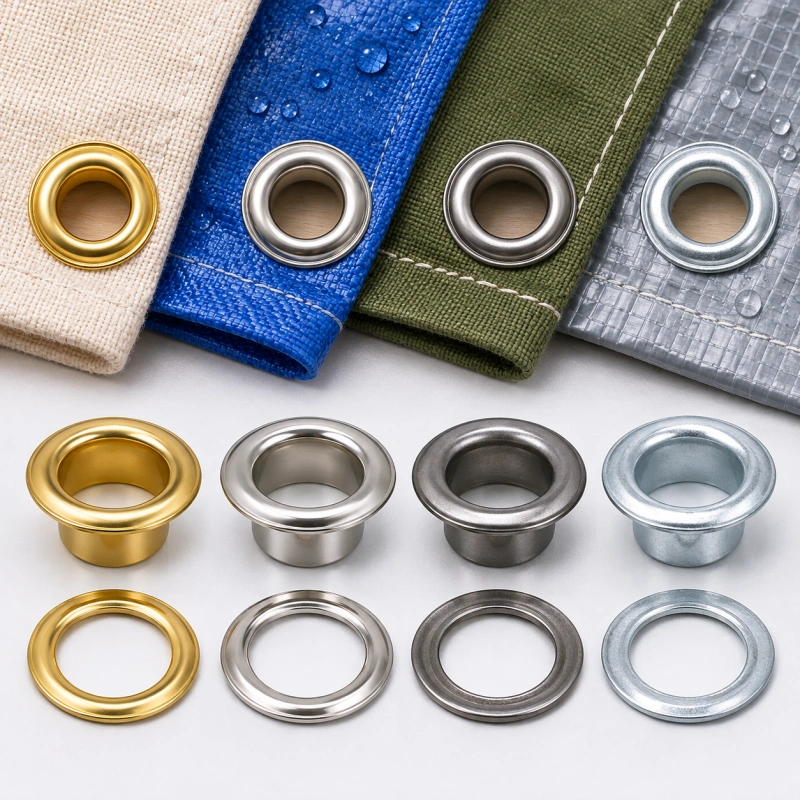
Choosing a grommet material starts with the finished product. A curtain used indoors, a banner exposed to rain, and a cover near saltwater place different demands on the hardware. Appearance and corrosion resistance matter, but so do the washer, fabric thickness, hole preparation and setting method.
This guide compares solid brass, stainless steel, plain carbon steel and zinc-coated steel grommets used to reinforce holes in fabric and similar materials. It also explains what to check before you change materials on a grommet setting machine.
What Materials Are Grommets Made Of?
The word grommet covers several types of parts. Metal grommets commonly reinforce holes in fabric, leather, banners and tarps. Many are set with a matching washer. Rubber grommets usually protect a cable or hose where it passes through a rigid panel. Plastic fittings may provide trim or reinforcement, depending on their design.
These parts serve different purposes and use different installation methods. For a fabric grommet, identify the base metal, any coating or finish, and the matching washer before comparing options.
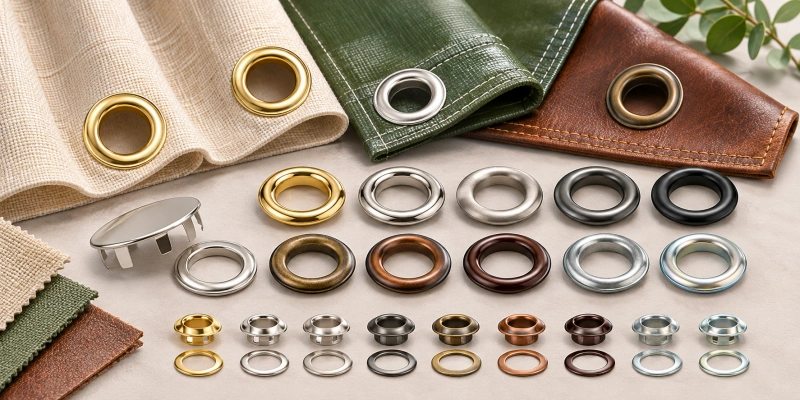
Metal Grommet Materials Compared
| Material | Where it may fit | Main point to check |
|---|---|---|
| Solid brass | Curtains, bags, leather goods and outdoor textiles where appearance matters | Alloy, finish and exposure to moisture or cleaning chemicals |
| Stainless steel | Products exposed to frequent moisture or where a specified stainless grade is required | Grade, chloride exposure and washer material |
| Plain carbon steel | Protected indoor applications where cost and appearance requirements allow it | Rust during storage and use |
| Zinc-coated steel | Applications where a specified zinc finish provides suitable protection | Coating process, coverage and condition after setting |
Galvanized steel is steel with a zinc coating, rather than a separate base metal. The term alone does not identify how the coating was applied or how thick it is. Likewise, a brass-colored grommet may be solid brass or plated steel.
Solid Brass and Brass-Plated Steel
Brass is a copper-zinc alloy. A solid-brass grommet is brass throughout; a brass-plated steel grommet has a steel core beneath its finish. If that finish wears through, the exposed steel can develop red rust. Solid brass can tarnish or corrode, but it has no steel core to expose.
Brass is often selected for its appearance and its use in formed fasteners. Its setting behavior still depends on the alloy, temper and barrel dimensions. When you specify brass for a curtain, bag or leather product, consider both the visible finish and the conditions in which the product will be cleaned or used. Ask for the base-metal specification if the distinction between solid brass and plated steel matters to the order.
Stainless Steel: 304 and 316
“Stainless steel” describes a family of alloys, not a single grade. Type 304 is widely used; type 316 is often considered where chloride exposure is greater. Both can develop localized corrosion when moisture and salts remain trapped around the hardware.
For a coastal cover, describe the actual exposure: occasional spray, persistent salt deposits, standing water or direct seawater contact. Specify the grade for both the grommet and washer, then inspect the assembled part for areas that may retain moisture. Grade choice also affects purchasing and setting trials; the word stainless on its own does not identify the supplied alloy.
Plain Carbon Steel
Uncoated carbon steel may suit a dry, protected application with modest appearance requirements. It can also rust in storage, during shipping or after cleaning. On pale fabric, rust can leave visible stains.
If a quotation says only “steel grommet,” ask whether the part is bare, plated or otherwise coated. This distinction is especially useful when comparing samples that look alike but will be used in different environments. For products exposed to regular condensation or rain, evaluate a specified protective finish or another base metal.
Zinc-Coated Steel
A zinc coating protects the underlying steel, but its performance depends on the coating process, thickness, coverage and exposure. Zinc plating, mechanical plating and hot-dip galvanizing are different processes. A supplier’s use of the word galvanized does not establish which process was used for a particular grommet.
Setting can also affect the finished coating. Check the rolled barrel, flange and washer contact area for scratches or exposed steel after installation. For an outdoor product, specify the coating you are buying and assess a set sample, rather than judging an uninstalled grommet by its color.
Which Material Fits Your Application?

| Application | Materials to assess | What matters most |
|---|---|---|
| Indoor curtains | Brass, stainless steel or steel with a suitable finish | Appearance, cleaning method and possible fabric staining |
| Tarps and outdoor banners | Brass, specified stainless steel or suitable coated steel | Rain exposure, edge reinforcement and repeated tension |
| Leather goods | Brass or coated steel | Finish wear, leather thickness and appearance on both sides |
| Marine covers | Grade-specific stainless steel or an assessed brass assembly | Salt exposure, trapped moisture and washer material |
| Industrial textiles | Material selected for the service environment | Multiple layers, coatings, load direction and consistent setting |
The grommet material is one part of the assembly. A reinforced hem, suitable hole and correctly seated washer can have a major effect on how the finished product holds under load. Compare candidate hardware on the actual substrate, especially when you change the fabric, washer style or exposure conditions.
How Material Choice Affects Setting Machines and Dies
A setting machine forms a particular grommet through a particular stack of material. The metal’s grade and temper affect forming; the barrel length and wall thickness affect how much material the die must shape. The grommet diameter, flange and washer determine how the parts locate in the tooling.
Start with the grommet and washer drawings or physical samples. Measure the inside diameter, flange diameter, barrel length and wall thickness. Then check the substrate thickness and the length of barrel available to form beneath the washer. The die selection guide covers dimensional matching in more detail.
Hole preparation is part of the setup. Some systems use a pre-punched hole; others are designed to pierce and set in one operation. An oversized hole can reduce retention, while a poor cut can damage fabric or its coating before the grommet is installed.
Match the Die, Washer and Feed System
The die supports the flange and forms the barrel so the washer seats securely. Changing from a flat washer to a toothed or neck washer can change the way the assembly sets. Check the front flange, formed barrel and washer together after any hardware change.
On an automatic machine, the parts also have to travel through the feed system consistently. Dimensions, orientation, surface finish and variation between parts can affect feeding. A successful hand-set sample therefore does not, by itself, establish that the same grommet and washer will feed reliably at production speed.
QC Machinery’s automatic eyelet punching machine describes automatic feeding for eyelets and washers with customized dies. To assess a proposed grommet material or a different supplier’s hardware, provide the actual parts, substrate and required output so the machine and tooling can be matched to the application.
Inspect the Finished Setting
Inspect both sides of the installed grommet under consistent lighting. Look for an even formed barrel, a seated washer, splits, sharp edges, coating damage and marks on the substrate. On coated or layered fabric, inspect the surface around the flange and the edge of the hole as well.
If the grommet must carry a defined load, test the finished assembly under conditions that reflect its use. Record the acceptance requirement for your product and keep samples of any failures alongside the hardware and setup details. This makes it easier to identify whether a later issue came from the substrate, supplied parts or setting process.
Grommet Material Selection Checklist
Before requesting a quotation or machine recommendation, prepare:
- The finished product, expected moisture or salt exposure, cleaning method and appearance requirement.
- The load direction, edge reinforcement and any required product test.
- The proposed base metal and grade, plus the coating or finish specification.
- Grommet dimensions and a drawing or physical sample.
- Washer type, material and dimensions.
- Substrate composition, number of layers, total thickness and hole preparation method.
- Required output and the machine or die setup currently in use.
These details allow the supplier to assess the complete assembly. They are especially useful when a change in supplier leaves the catalog size unchanged but alters the barrel, washer or finish.
FAQs
How Can I Tell Solid Brass From Brass-Plated Steel?
Check the supplier’s base-metal specification. Surface color cannot establish the core material. Where verification is necessary, material identification or examination of a representative cross-section can resolve the difference.
Can the Same Die Set Brass and Stainless Steel Grommets?
It can be possible for specific parts, but the metal name does not determine die fit. Compare the actual grommet dimensions, washer and formed result, then trial the setup with the intended substrate.
Do Zinc-Coated Steel Grommets Eventually Rust?
They can. The zinc coating’s condition and the service environment affect when steel becomes exposed. Inspect the coating on the installed grommet, particularly around the formed barrel and washer.
Need Help Matching Grommets to a Setting Machine?
Send QC Machinery your grommet and washer samples or drawings, material and coating specifications, substrate details and output target. The team can review the proposed assembly and recommend a suitable machine and die configuration. You can also browse the metal grommet range and automatic eyelet punching machine before discussing your application.