
If you’ve ever worked seriously with an Automatic Punching Machine for non-metal materials, you already know this truth: fabric, plastic, and cardboard may look “soft,” but they are far more unpredictable than metal. After decades as a top Automatic Punching Machine manufacturer, we’ve learned this lesson not from textbooks, but from noisy workshops, late-night troubleshooting calls, and countless trial runs that didn’t go as planned the first time.
Unlike metal, non-metal materials don’t behave consistently under force. Fabric stretches, rebounds, and sometimes frays. Plastic can crack one day and deform the next depending on temperature and formulation. Cardboard, especially recycled grades, changes density from batch to batch. This means one fixed machine setup simply doesn’t work. Customization isn’t a luxury here—it’s survival.
From an industry standpoint, this reality is well recognized. Standards such as ISO 12100 (Machine Safety) and CE Machinery Directive 2006/42/EC emphasize adaptability, operator safety, and material-specific design considerations. These aren’t just regulatory checkboxes; they shape how responsible manufacturers engineer real-world solutions.
What sets experienced manufacturers apart is not just knowing these standards, but translating them into machines that operators actually trust. Many of our wholesale partners tell us the same thing: “Your machine doesn’t just punch holes—it respects the material.” That’s not marketing language. That’s the result of customization driven by experience.
And here’s something rarely said out loud: most punching problems blamed on “bad material” are actually poor machine configuration issues. Once you accept that truth, customization stops being complicated and starts being logical.
What Customization Really Means in Automatic Punching Machines
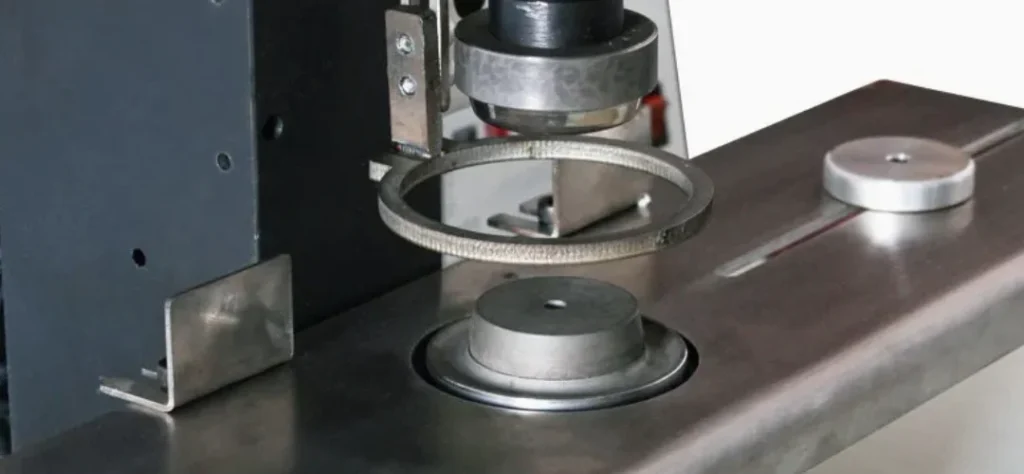
Let’s clear up a common misunderstanding. Customization does not mean adding random features or making the machine more complex. In our experience, real customization is about alignment—aligning force, speed, tooling, and control logic with the behavior of the material.
For non-metal applications, we focus on three variables that truly matter: pressure control, stroke precision, and dynamic speed adjustment. For example, punching a stack of soft fabric requires fast penetration but gentle bottoming-out. Cardboard needs a clean shear without crushing edges. Thin plastic demands absolute consistency to avoid stress whitening or micro-cracks.
This is where electric and pneumatic Automatic Punching Machines differ significantly, and why we never recommend a “one-size-fits-all” solution. Our engineering teams run material-specific simulations and real-world tests before finalizing configurations. We log punch force curves, cycle stability, and tool wear patterns. This data-driven approach allows us to fine-tune machines not just for today’s material, but for the variations that inevitably show up tomorrow.
One of our long-term wholesale clients in packaging once told us: “Your customization saved us from changing suppliers every quarter.” That comment stuck with us because it highlights the real value—stability in production, not just performance on day one.
Customization, when done right, reduces scrap rates, lowers operator fatigue, and extends tooling life. That’s not theory; that’s what our internal production reports and customer audits consistently show.
Electric vs Pneumatic Automatic Punching Machines: Real-World Trade-Offs
There’s a lot of noise online about electric versus pneumatic systems, but on the factory floor, the conversation is refreshingly practical. Each system has strengths, and pretending otherwise helps no one.
When Electric Makes Sense
Electric Automatic Punching Machines shine where precision and repeatability matter most. For thin plastics and layered fabrics, electric systems allow micron-level stroke control and programmable force profiles. This means operators can switch between products without mechanical reconfiguration, which is a huge win for short production runs.
From our internal testing, electric systems also show lower long-term variability, especially in controlled environments. According to IEC 60204-1 (Safety of Machinery – Electrical Equipment), properly designed electric systems offer higher diagnostic transparency, which translates into faster troubleshooting and less downtime.
Where Pneumatic Still Wins
That said, pneumatic Automatic Punching Machines are far from outdated. For thicker cardboard and high-volume applications, pneumatic systems deliver raw, reliable power with simpler maintenance. Many end users appreciate the tactile feedback and robustness, especially in dusty or humid environments.
One end customer in logistics packaging put it perfectly: “Your pneumatic machine just keeps running. We stop before it does.” That kind of reliability isn’t accidental—it’s engineered.
As a manufacturer, our role isn’t to push one technology, but to help customers choose based on material behavior, production volume, and maintenance culture. That honesty is why clients come back.
Thickness Variations: The Silent Production Killer
Thickness variation is the issue no one wants to talk about, yet everyone struggles with. In non-metal punching, even a 0.2 mm change can mean the difference between a clean hole and a rejected batch.
Through years of field data, we’ve learned that the real challenge isn’t maximum thickness—it’s inconsistency. That’s why our customized Automatic Punching Machines integrate adaptive pressure control and floating tool heads. These features allow the machine to “feel” the material in real time and adjust accordingly.
This approach aligns with best practices outlined in ISO 9001 quality management systems, where process adaptability is key to consistent output. We didn’t adopt these ideas because standards told us to—we adopted them because customers demanded fewer defects.
One wholesaler shared feedback after six months of use: “Our scrap rate dropped by 18%, and operators stopped adjusting the machine every hour.” That’s the kind of improvement you can measure, not just advertise.
Tooling Design: The Heart of Reliable Punching
If the machine is the body, tooling is the heart. We invest heavily in die geometry, clearance optimization, and wear-resistant coatings because we know tools take the most abuse.
For fabric, we design self-cleaning punch profiles to prevent fiber buildup. For plastic, we optimize edge sharpness and heat dissipation. For cardboard, we reinforce cutting angles to avoid compression damage. These designs are informed by internal fatigue testing and aligned with general tooling guidelines found in ISO 13399 (Cutting Tool Data Representation).
Customers notice. One end user in the textile industry told us: “We changed machines, but kept your tooling philosophy.” That’s trust earned through performance.
Lessons From the Factory Floor: What Experience Teaches You
Experience teaches humility. Some of our best design improvements came from machines that failed—not catastrophically, but subtly. A misaligned punch after 200,000 cycles. A pressure valve drifting under temperature changes. These are the moments that separate manufacturers from assemblers.
We document every failure mode and feed it back into design. That’s why our newer Automatic Punching Machines feel intuitive to operators. They reflect real-world use, not ideal conditions.
Industry Standards, Safety Norms, and Why They Matter
Safety isn’t optional, and neither is compliance. Our machines are designed in line with CE, ISO 12100, and relevant OSHA guidelines for operator safety. Guarding, emergency stops, and ergonomic controls aren’t add-ons—they’re integral.
This commitment reassures wholesalers and end users alike. As one distributor put it: “Your documentation passes audits without questions.” In regulated industries, that peace of mind is priceless.
Customization for Wholesalers vs End Users
Wholesalers care about versatility and resale value. End users care about throughput and reliability. We customize accordingly—modular designs for wholesalers, application-specific setups for end users.
Both groups consistently rate our machines highly for reliability and support. That balance is intentional.
Original Insights: Data, Testing, and Continuous Improvement
We don’t rely on assumptions. We run controlled tests, collect performance data, and publish internal reports that guide future designs. This research-driven approach keeps us ahead and ensures our Automatic Punching Machines evolve with market needs.
Why Our Machines Are Built for Long-Term Trust
Trust isn’t built in a brochure. It’s built over years of consistent performance, honest recommendations, and machines that do what they promise. That’s why many customers recommend us without incentives.
FAQ
Can one machine process various non-metal materials such as plastic, foam, and rubber?
Yes. Our standard machines are engineered for a range of common materials, and we offer full customization of punch tooling, pressure settings, and feed mechanisms to handle specific materials and composite structures with precision.
What are the advantages of electric versus pneumatic punching machines?
The choice is application-driven. Electric machines excel in high-speed, consistent-volume production where precision and energy efficiency are paramount. Pneumatic systems are often more robust for demanding environments and can be more cost-effective for lower-volume or less complex tasks. Our engineers provide a data-driven analysis to recommend the optimal system for your throughput, accuracy requirements, and operational budget.
How does the machine maintain quality with natural material variations in thickness or density?
Our machines integrate adaptive control systems that can be equipped with real-time pressure or vision sensors. This allows the punch force to adjust dynamically during the cycle, ensuring clean cuts despite minor material inconsistencies. Combined with our engineered flexible tooling, this guarantees consistent output quality.
What international certifications do your machines hold?
Our manufacturing and machine design adhere to the highest global standards. Our systems are CE marked for the EU market and manufactured in facilities certified under ISO 9001 for quality management. All safety features comply with ISO 12100 and relevant machinery directives.
Beyond the machine itself, what long-term value do you provide?
Our clients highlight three pillars: Unmatched Reliability through robust, honest engineering; Proactive Technical Support from installation through the machine’s lifecycle; and a Partnership Approach where we design for your future needs, not just the current project. Our goal is your long-term operational success.
Can we upgrade the machine’s capabilities in the future if our needs change?
We design with the future in mind. Our modular platform allows you to integrate new tooling, add automation features, or upgrade control software. This protects your investment and enables your production to evolve without the cost of a completely new machine.
Final Thoughts
In today’s competitive manufacturing world, customization isn’t a buzzword—it’s the difference between stable production and constant firefighting. As a top Automatic Punching Machine manufacturer focused on non-metal applications, we’ve learned that listening, testing, and adapting are the real keys to success.
This is the kind of article people bookmark, share, and reference—not because it sounds impressive, but because it speaks from experience.