
I run a factory. Not a design studio, not a consulting firm—an actual manufacturing floor with machines running, thread flying, and orders to ship. So when I talk about the QCF2401, I’m not speaking as a theorist. I’m speaking as someone who watches what works and what doesn’t, shift after shift.
The medical textile industry is shifting under our feet. Single-use disposables are losing ground to reusables, not just because of green initiatives, but because large hospital systems have realized that laundering is cheaper than landfilling. Surgical gowns, isolation wraps, patient drapes—these are now being engineered for fifty, sometimes one hundred cycles. That changes everything about how they need to be built.
And the hardest thing to get right, the thing that fails first under repeated industrial washing, is the closure.
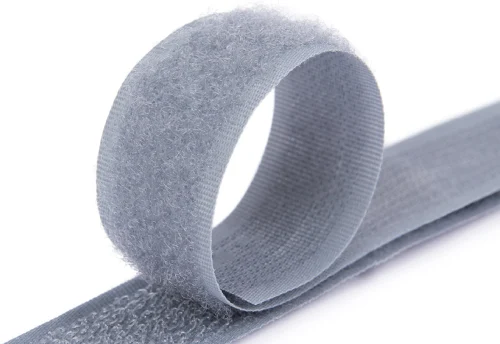
Hook and loop is the obvious choice for reusables. It adjusts, it breathes, it doesn’t introduce latex allergies. But it only works if it stays on the garment. That sounds simple, but anyone who has run production knows it’s the opposite of simple.
This is why we developed the QCF2401. Not as a generic sewing machine, but as a specific answer to a specific problem: how to attach hook and loop to medical-grade textiles at scale, with zero variation, through a hundred wash cycles. I want to walk you through the problem, the machine, and the math that makes this the only rational choice for medical garment manufacturers today.
The Pain Points: Why Manual Stitching Fails Medical Grade
Let me be direct. Manual hook-and-loop attachment is the weakest link in reusable medical garment production, and it’s not close.
First is the human element. An experienced operator can place a strip accurately at nine in the morning. By three in the afternoon, after thousands of repetitions, the margins drift. It’s not laziness; it’s physiology. Fine motor fatigue is real. The problem is that medical fasteners require exact margins. A two-millimeter deviation doesn’t look like much, but in a sterile field environment, it can compromise the seal of a surgical gown. In a rehabilitation brace, it creates pressure points. In an audit, it’s a finding.
Second is the precision gap. Hook and loop is not forgiving. If the stitching is too close to the edge, the fastener tears out. Too far from the edge, it flags up and catches on other textiles during washing. The acceptable window is narrow, and manual positioning drifts in and out of that window constantly.
Third is labor. Skilled sewing operators are not getting easier to find. Training someone to do medical-grade attachment work takes weeks of supervised production. Then they leave, and you start over. You’re not just paying the wage; you’re paying the inefficiency, the rework, the quality control hours spent sorting good pieces from bad.
I’ve visited enough factories to know that many of them are managing these problems through inspection. They sew first, then measure, then reject. That’s not quality assurance. That’s sorting, and sorting is expensive.
The QCF2401: Engineering Precision into the Process
When we designed the QCF2401, we started with a simple premise: don’t give the operator a chance to make an error.
The automatic feeding system is the heart of this machine. It positions the hook-and-loop strip exactly where it needs to go, every cycle, without the operator touching the material. This is not a guided assist; it’s a closed-loop positioning system. The strip feeds, the machine sews, the next cycle indexes. There is no margin drift because there is no manual placement.
We run the machine at 3200 RPM, which is genuinely fast for industrial sewing. But speed is not the headline. The headline is that we maintain perfect stitch tension at that speed across high-density barrier fabrics. Level 3 and Level 4 medical textiles are slippery. They have coatings that are sensitive to needle heat. Push a standard machine too hard and you get puckering, or worse, you melt the fluid-resistant layer. The QCF2401’s feed timing and needle penetration curve are specifically tuned for these materials.
The sewing field is 50 by 30 millimeters. I’m often asked why we chose that dimension. The answer is simple: it’s the most common fastener size in medical garments. Gown necklines, waist closures, orthopedic brace straps—they all cluster around this geometry. We didn’t design a machine that can sort-of handle medical work. We designed one that is optimized for it.
The ROI Analysis: What the Math Actually Looks Like
I’m a factory owner. I don’t buy equipment because it’s interesting. I buy equipment because the numbers work. Here are the numbers that mattered to us.
Throughput first. Manual hook-and-loop attachment is bound by the operator’s rhythm. Feed, align, sew, cut, repeat. With automatic feeding, the alignment step happens concurrently with the sewing cycle. The gain is not ten or fifteen percent. It’s a structural increase in units per hour, sustained across the entire shift without degradation.
Waste reduction second. Every crooked strip, every rejected garment—that’s fabric you paid for, labor you already spent, and a delivery deadline you’re now chasing. The QCF2401 essentially eliminates alignment-related rejects. In our own production, the scrap rate on hook-and-loop attachment dropped below one percent. That’s not a marginal improvement; that’s a category change.
Integration third. The machine runs on 220 volts and 400 KPA air pressure. No special utilities, no electrical upgrades. The footprint is 1300 by 900 millimeters. You’re not rearranging your factory floor to accommodate it. You roll it in, connect it, and it’s producing within the hour.
The payback period on this machine, under real-world production volumes, is under twelve months. That’s not a projection; that’s what our customers are reporting.
Quality Assurance and Compliance: The Medical Edge
Medical textile manufacturing is regulated, and the regulations are tightening. ISO 13485, EN 13795—these standards place heavy emphasis on process validation. When you’re hand-feeding material, every operator is a variable. Auditors know this. They ask how you control variation, and the honest answer is often “we inspect more.”
With the QCF2401, the answer changes. You are no longer relying on operator skill. You are executing a programmed, repeatable automated process. Every fastener is placed with the same margin, the same stitch density, the same thread tension. That is not just better quality; it is auditable quality.
The wash-cycle integrity piece is critical. Industrial laundry is mechanically abusive. Hook and loop acts like abrasive paper inside the wash drum, constantly abrading the very threads that hold it down. If the stitching tension varies, those threads wear unevenly and snap. Automated stitching lays down consistent tension every time. That is what allows a reusable garment to achieve fifty, seventy, one hundred cycles without fastener failure.
Applications Across the Medical Textile Spectrum
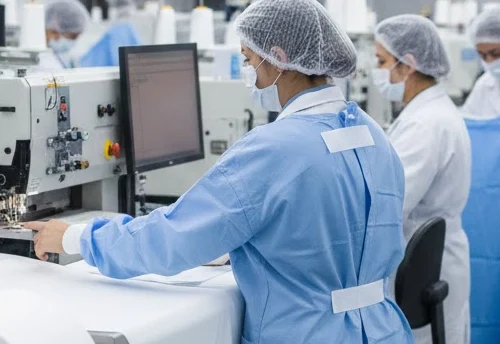
We see the QCF2401 deployed in three primary environments.
Surgical and acute care. Gowns, drapes, and sterile wraps where fastener failure is not an acceptable outcome. These manufacturers run high volumes, tight tolerances, and zero-defect quality policies.
Orthopedics and rehabilitation. Adjustable compression sleeves, braces, and supports that need to fit a range of patient anatomies. These products require consistent fastener placement for proper tension distribution.
Long-term care and hygiene. Washable incontinence products, patient lifts, and adaptive clothing. These garments face the most aggressive laundering cycles and the highest mechanical stress.
Each of these applications has different fabric properties, different production volumes, different quality requirements. The QCF2401 handles the full spectrum because the core problem—attaching hook and loop repeatably—is universal.
Conclusion
I believe we have reached the end of the era where medical textile manufacturers can rely on manual methods for critical operations. The volume is too high, the margins are too tight, and the compliance requirements are too demanding. Automation is no longer a competitive advantage; it is the baseline for participation in major medical tenders.
The QCF2401 is not a speculative investment. It is a proven production tool that directly addresses the most persistent quality issue in reusable medical garments. It reduces labor dependency, eliminates a major source of variation, and produces auditable quality records that satisfy the most stringent regulatory scrutiny.
If you are still attaching hook and loop by hand, you are leaving money on the table and risk in your process. That is not a judgment; it is simply the math.
FAQ
What types of hook and loop materials can the QCF2401 handle?
The machine accommodates standard woven and knitted hook-and-loop tapes in widths compatible with the 50*30mm sewing field. It handles both the hook side and loop side without adjustment.
How long does it take to train an operator on this machine?
Basic operation can be taught in under two hours. Because the machine handles alignment automatically, the operator’s role shifts from skilled stitching to machine tending. This dramatically reduces training time compared to manual methods.
Does the machine require special maintenance?
No. The QCF2401 uses standard industrial sewing components and follows conventional maintenance schedules. The automatic feeder mechanisms are designed for minimal intervention.
Can the machine integrate with existing production lines?
Yes. The standard 220V power and 400KPA air pressure requirements match most industrial sewing facilities. The compact footprint allows placement directly into existing workflow layouts.
What is the typical payback period?
Based on current customer data, manufacturers running two shifts or more typically recover the full investment within twelve months, driven by labor savings, waste reduction, and throughput gains.
Do you offer training and support?
We provide on-site installation and operator training with every machine. Technical support and spare parts are available through our global service network.
Is the machine suitable for small-batch production?
Yes. While the QCF2401 is built for high-volume output, its rapid setup and changeover capabilities make it equally efficient for shorter production runs with frequent fastener size changes.
How does the machine perform with coated or fluid-resistant fabrics?
The machine’s feed system and needle penetration parameters are specifically calibrated for coated medical textiles. It maintains stitch quality without damaging barrier coatings or fluid-resistant layers.