

Outdoor adventures test your gear in ways everyday products never experience. Driving rain, strong UV exposure, salt air, freezing temperatures, and constant mechanical stress all work together to find the weakest point in your equipment. Very often, that weakest point is not the main fabric or the stitching, but something much smaller and easier to overlook: the grommet.
In outdoor gear such as tents, tarps, awnings, canopies, waterproof bags, and tarpaulins, grommets—also known as eyelets—act as critical load-bearing and sealing components. You rely on them to anchor guy lines, secure corners, create ventilation points, and distribute tension evenly across fabric. When they fail, the consequences go far beyond cosmetic damage. A single corroded or poorly installed grommet can lead to water ingress, fabric tearing, structural collapse, or even safety risks in extreme conditions.
In this article, you will explore how grommets contribute to weather resistance, what makes a grommet truly suitable for harsh outdoor environments, and why manufacturing quality—especially precision eyelet installation—plays such a decisive role. You will also see how advanced production equipment, such as professional Eyelet Machines used by manufacturers like QC Machinery, becomes the hidden advantage behind reliable outdoor products.
Grommets: The “Weather Outposts” of Outdoor Gear
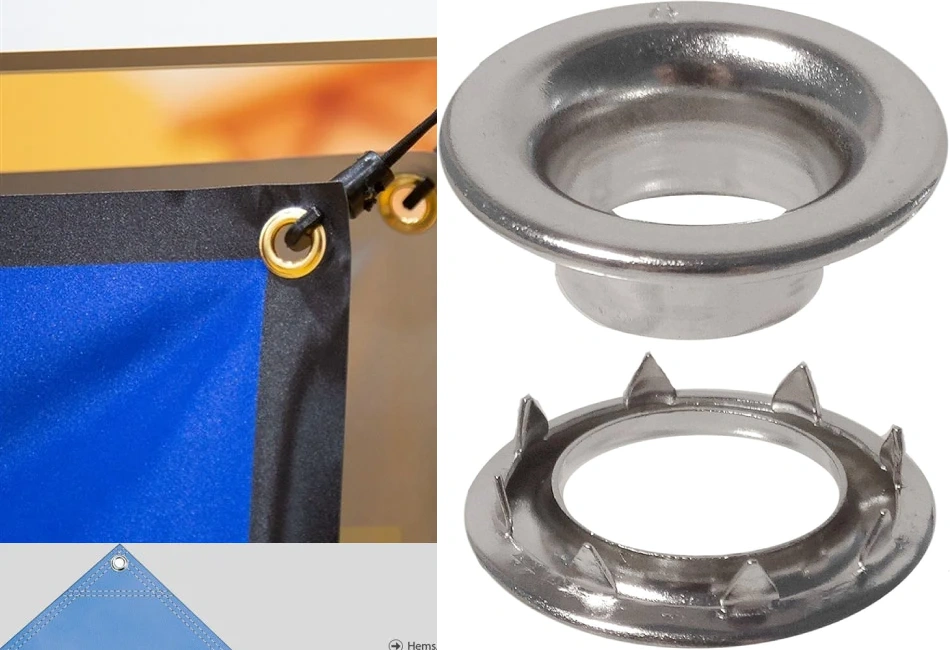
When you look at a tent or tarp, your eyes naturally focus on the fabric, seams, and overall design. Yet every place where a rope passes through, a pole is secured, or air needs to circulate becomes a stress concentration point. Grommets are installed exactly at these locations.
You can think of each grommet as a miniature outpost standing guard against the elements. It has three essential jobs:
- Protect the fabric from tearing or fraying around holes
- Distribute mechanical load from ropes, cords, or hooks
- Maintain sealing and structural integrity under wind, rain, and repeated movement
If a grommet is weak, loosely installed, or made from unsuitable material, it becomes the first failure point. Wind pulls harder on the rope, water seeps through micro-gaps, corrosion spreads, and soon the surrounding fabric gives way.
That is why, when you aim for truly weather-resistant outdoor gear, you cannot treat grommets as minor accessories. Their performance is shaped by material choice, design, and—most importantly—manufacturing precision.
Material Choices That Define Weather Resistance
2.1 Brass Grommets: Balanced and Versatile
Brass has long been a popular choice for outdoor grommets, and for good reason. When you use brass grommets:
- You benefit from natural corrosion resistance, especially in wet environments
- You get good strength and malleability, which helps achieve tight, secure installation
- You enjoy a balance between cost and durability
For general outdoor applications—such as tents, tarps, and awnings—brass performs reliably in rain, moderate UV exposure, and fluctuating temperatures. However, you should be aware that in marine or highly saline environments, brass can still suffer from long-term corrosion if not properly coated or alloyed.
2.2 Stainless Steel Grommets: Maximum Durability
If your outdoor gear is designed for extreme conditions, stainless steel grommets offer superior performance:
- Excellent corrosion resistance, even in saltwater environments
- High mechanical strength, ideal for heavy loads and strong winds
- Long service life, reducing maintenance and replacement costs
The trade-off is cost and manufacturing difficulty. Stainless steel is harder and less forgiving during installation. This makes precision machinery essential—poor riveting can crack fabric or leave gaps that defeat the purpose of the material’s strength.
2.3 Plastic and Polymer Grommets: Lightweight and Specialized
In certain applications, especially where weight and electrical insulation matter, high-performance plastic grommets are used. You may see them in:
- Lightweight tarps
- Ultralight backpacking gear
- Products requiring non-metallic components
Modern engineering plastics can resist UV and moisture surprisingly well, but they rely heavily on accurate forming and alignment during installation. Without precise control, plastic grommets can deform, loosen, or fail prematurely.
Design Features That Enhance Weather Performance
Material alone does not guarantee durability. You also need to consider grommet design, which directly affects sealing, load distribution, and long-term resistance.
3.1 Two-Piece vs. One-Piece Grommets
Most outdoor-grade grommets use a two-piece design consisting of an eyelet and a washer. This structure allows:
- Better load distribution across a wider fabric area
- Stronger mechanical locking during riveting
- Reduced risk of fabric tearing
One-piece grommets are quicker to install but often lack the same holding strength, making them less suitable for high-stress outdoor use.
3.2 Sealing Elements and Coatings
For weather resistance, many grommets incorporate:
- Protective coatings to reduce corrosion
- Smooth, rounded edges to prevent fabric abrasion
- Optional rubber or polymer washers to improve sealing
These features only work as intended if they are installed correctly. Even the best coating cannot compensate for uneven pressure or misalignment during riveting.
Installation Quality: Where Weather Resistance Is Won or Lost
You can select premium materials and advanced designs, yet still end up with poor performance if installation quality is inconsistent. This is where many outdoor products fail.
4.1 Why Precision Riveting Matters
During installation, the grommet must be:
- Perfectly centered in the fabric hole
- Riveted with uniform pressure
- Secured tightly without crushing or cutting the fabric
If pressure is too low, the grommet loosens over time, creating gaps that let water in. If pressure is uneven or excessive, the fabric weakens and tears under load.
4.2 The Manufacturing Reality
When you produce outdoor gear at scale, manual installation introduces variability. Human fatigue, inconsistent force, and alignment errors all reduce reliability. That is why professional manufacturers depend on automatic Eyelet Machines.
High-quality machines ensure:
- Stable and repeatable riveting force
- Consistent alignment for every grommet
- High-speed production without sacrificing accuracy
This consistency is essential for outdoor products that must meet strict durability and weather-resistance standards.
The Manufacturing Edge: How Eyelet Machines Shape Final Performance
At this point, you may realize that weather-resistant grommets are not just a design choice—they are a manufacturing outcome. The performance you see in the field is determined long before the product reaches the user.
5.1 Why Eyelet Machines Matter
A professional Eyelet Machine is designed to control every variable in the grommet installation process:
- Stable riveting speed ensures uniform deformation
- Even feeding and positioning prevents misalignment
- Controlled pressure settings adapt to different materials and thicknesses
For outdoor gear, where fabrics can range from lightweight nylon to heavy-duty tarpaulin, this adaptability is crucial.
5.2 QC Machinery’s Role in Outdoor Product Manufacturing
Manufacturers who specialize in outdoor products often rely on equipment suppliers with deep industry experience. QC Machinery focuses on Eyelet Machines that are widely used in applications such as:
- Tent fabrics
- Tarpaulins
- Outdoor covers and canopies
Their machines are engineered to deliver high efficiency, consistent quality, and strict process control—all of which directly translate into more reliable grommets in finished products. When every eyelet is installed with the same precision, weather resistance becomes predictable rather than accidental.
From Ideal Standards to Real-World Production
As a brand owner or manufacturer, you may ask yourself: how do you ensure that your outdoor gear consistently meets high weather-resistance expectations?
The answer lies in evaluating not only your materials and designs, but also your production partners and equipment.
Experienced manufacturers look for:
- Proven expertise in outdoor applications
- Dedicated machines for grommet and eyelet installation
- Customization options for different fabric thicknesses and grommet sizes
- Documented quality control processes
QC Machinery, with years of focus on eyelet manufacturing equipment, supports these needs by offering machines tailored to specific product requirements. This kind of specialization helps manufacturers achieve reliable, repeatable results at scale.
Maintenance Tips You Can Share with End Users
Even the best-manufactured grommets benefit from proper care. When you educate your customers, you extend product life and reinforce brand trust.
You can recommend that users:
- Rinse grommets with fresh water after exposure to salt or mud
- Avoid excessive tension on guy lines in extreme winds
- Inspect grommets regularly for signs of corrosion or loosening
- Store gear dry to prevent long-term moisture damage
These simple habits complement high-quality manufacturing and preserve weather resistance over time.
Conclusion
When you step back and look at the bigger picture, one truth becomes clear: outdoor gear is only as strong as its smallest components. Grommets may be small, but they carry immense responsibility. They hold tension, block water, and protect fabric at its most vulnerable points.
For you as a manufacturer or brand decision-maker, achieving superior weather resistance means thinking beyond surface-level features. It requires:
- Careful material selection
- Thoughtful grommet design
- And, most critically, precision manufacturing through professional Eyelet Machines
By partnering with experienced equipment providers like QC Machinery, you address weather resistance at its source. You ensure that every grommet installed on your products is secure, consistent, and ready to face the elements.
In the competitive outdoor market, this attention to detail becomes your silent advantage—one that customers may not always see, but will certainly feel when their gear performs flawlessly in wind, rain, and sun.