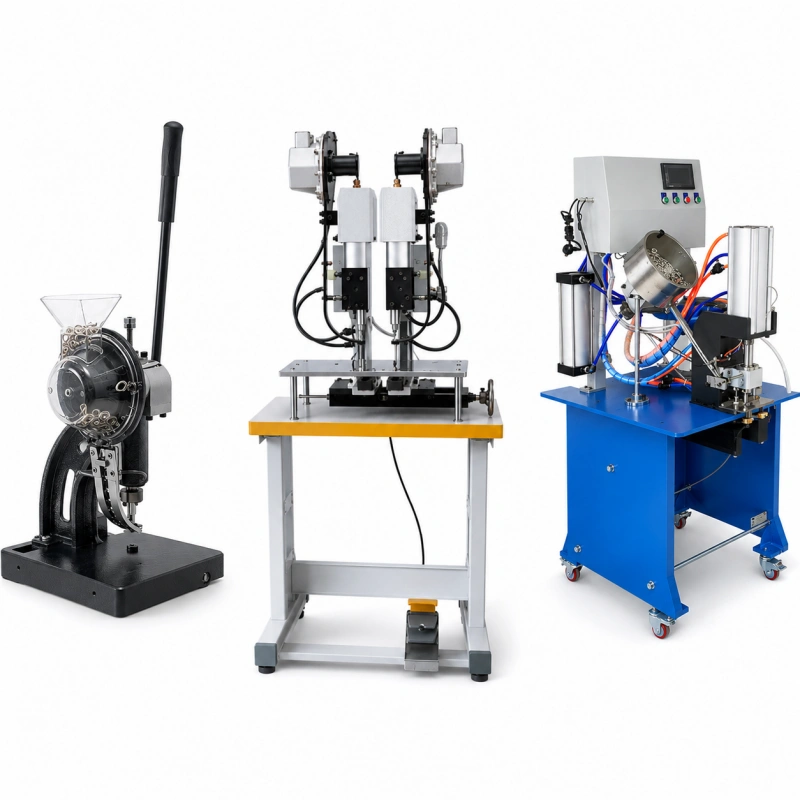
You need to choose the right eyelet machine based on your production goals. Manual machines suit hobbyists and small projects. Pneumatic machines deliver efficiency for small businesses—automatic machines power high-volume operations. QC Machinery stands out for reliability and quality.
- A stationery wholesaler in the USA said, “The reliability is unmatched. We haven’t had downtime in over a year.”
- A shoe manufacturer in Italy doubled production in three months after installing a new machine.
QC Machinery holds ISO9001 and CE certifications. You can rely on continuous support and fast delivery of spare parts. Assess your needs to decide between manual vs pneumatic vs automatic eyelet machines.
Key Takeaways
- Choose the right eyelet machine based on your production needs. Manual machines suit hobbyists, pneumatic machines fit small businesses, and automatic machines excel in high-volume operations.
- Pneumatic machines offer faster operation and greater consistency than manual machines. They reduce operator fatigue and are ideal for small businesses needing reliable output.
- Automatic eyelet machines provide the highest efficiency, handling 1200 to 2000 eyelets per hour. They require minimal manual intervention, making them perfect for large-scale production.
- Consider the total cost of ownership (TCO) when selecting a machine. This includes purchase price, maintenance, and energy costs over time.
- Evaluate your production goals and labor resources before investing. Use the buyer’s checklist to ensure you choose the best machine for your specific needs.
Eyelet Machine Types Overview
You can choose from several eyelet machine types, each designed for specific production needs. Manufacturers categorize these machines based on their operation and automation level. The chart below shows the variety and quantity of eyelet machine kits, materials, and molds available in the industry.
Manual Eyelet Machines
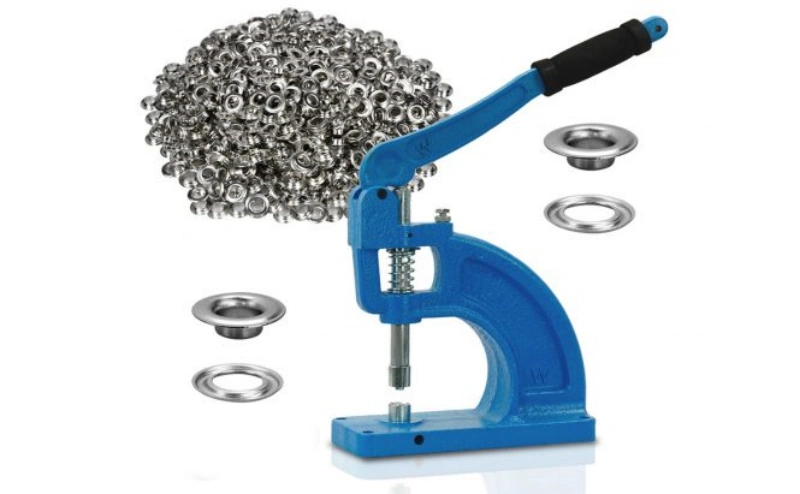
Manual eyelet machines offer a simple solution for small-scale projects. You operate these machines by hand, making them ideal for crafting, artistic projects, and banner making. You can use them for fabric, leather, and tarpaulin.
Manual eyelet machines accommodate different eyelet sizes, but you may find the process labor-intensive. Results depend on your technique, which can lead to inconsistent outcomes. The table below highlights typical applications and limitations.
| Applications | Limitations |
|---|---|
| Fabric and leather crafting | Inconsistent results due to operator variability |
| Tarpaulin banner making | Labor-intensive process |
| Artistic projects | Requires manual operation |
| Accommodates different eyelet sizes | May not be suitable for large-scale production |
Pneumatic Eyelet Machines
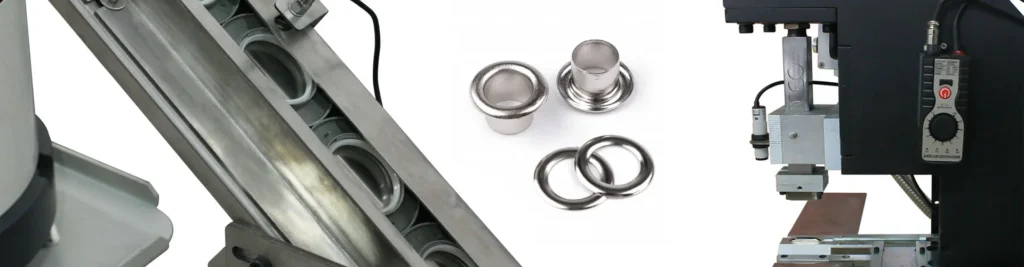
Pneumatic machines use compressed air to automate eyelet installation. You benefit from faster operation and greater consistency compared to manual methods. Pneumatic technology allows you to adjust settings for different materials and eyelet sizes.
These machines suit small businesses and workshops that need reliable output without full automation. You can achieve higher productivity and reduce fatigue. Pneumatic machines also support both metal and plastic eyelets, making them versatile for apparel, signage, and packaging.
Automatic Eyelet Machines
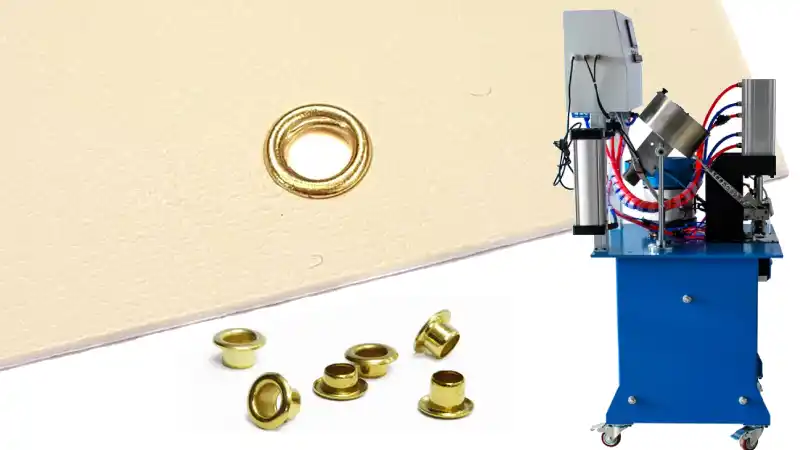
Automatic eyelet machines deliver the highest level of efficiency. You can automate the entire process, from punching holes to inserting eyelets. These machines are essential in industries like garment manufacturing, shoe production, leather goods, crafting, and home decor.
Automatic eyelet machines streamline production, improve precision, and ensure consistent quality. You can handle large volumes with minimal manual intervention. Many factories use automatic eyelet machines to attach eyelets or grommets quickly, which leads to durable products and enhanced productivity.
Tip: If you need to process hundreds or thousands of eyelets daily, consider an automatic eyelet machine or a grommet machine for maximum efficiency.
Key Differences: Manual vs Pneumatic vs Automatic Eyelet Machines
When you compare manual vs pneumatic vs automatic eyelet machines, you need to focus on several key differences. These factors will help you decide which solution fits your production needs and budget. Below, you will find a detailed breakdown of speed, labor, accuracy, cost, maintenance, versatility, and skill level.
Speed & Productivity
Speed matters when you want to boost output and meet deadlines. Manual vs pneumatic vs automatic eyelet machines show clear differences in production rates. Manual eyelet punching machines let you process about 800 eyelets per hour.
Pneumatic eyelet punching machines increase that range to 600–1000 eyelets per hour, depending on operator skill and material type. Automatic eyelet punching machines deliver the highest productivity, handling 1200–2000 eyelets per hour with consistent speed.
| Machine Type | Average Production Speed (eyelets per hour) |
|---|---|
| Manual | 800 |
| Pneumatic | 600 to 1000 |
| Automatic | 1200 to 2000 |
For example, a small banner shop using manual eyelet punching machines can finish a few hundred banners daily. A mid-sized apparel factory with pneumatic eyelet punching machines can double that output.
Large-scale manufacturers using automatic eyelet punching machines can process thousands of garments or tarps each shift.
Labor & Ease of Use
Labor requirements and ergonomics play a big role in your daily operations. Manual eyelet punching machines need one operator per station. You must use physical force, which can cause fatigue, especially with heavy materials. Pneumatic eyelet punching machines reduce the physical effort.
You still need an operator, but the machine does most of the work. Automatic eyelet punching machines require minimal manual intervention. One operator can oversee two or three machines, focusing on quality control instead of repetitive tasks.
- Manual machines require one operator per station and are physically demanding.
- Pneumatic machines reduce operator fatigue but still need supervision.
- Automatic machines allow one operator to manage multiple units, reducing labor costs and physical strain.
Note: Extended use of manual eyelet punching machines can lead to exhaustion and inconsistent results. Automatic eyelet punching machines keep performance steady, even during long shifts.
Accuracy & Consistency
You want every eyelet to look perfect. Manual vs pneumatic vs automatic eyelet machines differ in how they deliver accuracy and consistency. Manual eyelet punching machines depend on your skill and strength. Results can vary, especially after several hours.
Pneumatic eyelet punching machines offer more uniform results, thanks to controlled air pressure. Automatic eyelet punching machines provide the highest consistency. You get precise placement and uniform pressure for every eyelet, shift after shift.
| Machine Type | User Fatigue Impact | Training Time Impact |
|---|---|---|
| Manual Eyelet Machine | Increased fatigue over time; consistency drops after 4-5 hours | Requires skilled operators for effective use |
| Automatic Eyelet Machine | Less physical effort required; consistent performance | Longer setup time (8-15 minutes for die swap) |
Cost & TCO
You must consider both the purchase price and the total cost of ownership (TCO) when comparing manual vs pneumatic vs automatic eyelet machines. Manual eyelet punching machines have the lowest upfront cost. Pneumatic eyelet punching machines cost more but offer better productivity.
Automatic eyelet punching machines require a higher investment but deliver the best long-term value for high-volume users.
| Machine Type | Price Range |
|---|---|
| Automatic Eyelet Machine | $88 – $101 |
| Pneumatic Press YD-125 | $310.15 – $337.85 |
| Mini Pneumatic Eyelet Machine | $200 – $500 |
| Small Manual Press Eyelet Machine | $700 |
| Electronic Direct Drive Eyelet Machine | $450 |
| Ultra Performance Single Needle Machine | $708 – $838 |
| Benchtop/Semi-Auto Machines | $800 – $3,000 |
| Full-Auto Standalone Machines | $4,000 – $12,000 |
| Rotary/Indexing Systems | $15,000 – $30,000+ |
| Recommended Investment for Small Manufacturers | $5,000 – $8,000 |
The TCO includes not only the purchase price but also freight, installation, energy, maintenance, labor, tooling, and scrap material over five years. Ignoring hidden costs like energy and scrap can lead to unexpected expenses.
Maintenance
Maintenance affects uptime and long-term reliability. Manual eyelet punching machines need basic cleaning and lubrication. Pneumatic and automatic eyelet punching machines require regular inspections, lubrication, and occasional part replacements.
Automatic eyelet punching machines may need more frequent checks due to higher usage.
| Machine Type | Maintenance Costs | Expected Lifespan |
|---|---|---|
| Manual | Minimal, requires cleaning and occasional lubrication | 5–10 years |
| Automatic | Regular maintenance needed, includes inspections and servicing | 8–15 years |
| Frequency | Maintenance Tasks |
|---|---|
| Daily (Start of Shift) | Wipe die area clean, inspect punch edge, check air pressure, run 3 test eyelets, inspect back side |
| Daily (End of Shift) | Blow off machine with air, Wipe die and punch, leave ram in up position, log any issues |
| Weekly | Remove and clean die set, check die alignment, drain air line filter, Lubricate moving parts, tighten all bolts |
| Monthly | Inspect cylinder seals, check regulator stability, inspect foot pedal, Run 50-test batch, Document findings |
| Quarterly | Replace punch, Inspect bottom die, Tighten cylinder bolts, Test pressure consistency, Check for unusual noise |
Versatility
Versatility means you can handle different materials and eyelet sizes. Manual vs pneumatic vs automatic eyelet machines each offer unique strengths. Manual eyelet punching machines work well for small batches and various materials, but require more effort for thick fabrics or leather.
Pneumatic eyelet punching machines handle a wider range of materials and sizes, including metal and plastic eyelets. Automatic eyelet punching machines excel in high-speed settings and can process light to moderate weight fabrics, thick plastics, and even reinforced materials.
- JULY Newest Small Automatic Pneumatic Eyelet Punch Machine: Handles thick metal and reinforced plastic, max hole diameter 10mm.
- Model 83: For light to moderate weight fabrics, barrel diameter 0.91″ to 0.375″.
- Model 83 LT: For small eyelets, 0.47″ to 0.90″.
- Model 2R83: For light to medium weight materials, barrel diameter 0.125″ to flange diameter 0.625″.
Skill Level
Skill level impacts training time and output quality. Manual eyelet punching machines require skilled operators for best results. Pneumatic eyelet punching machines are easier to learn, with less physical demand.
Automatic eyelet punching machines need a longer setup time, but once configured, they deliver consistent results with minimal training. You can focus on quality checks instead of manual operation.
Tip: If you want to minimize training time and maximize consistency, automatic eyelet punching machines offer the best solution for large teams.
Feature Matrix: Manual vs Pneumatic vs Automatic Eyelet Machines
| Feature | Manual Eyelet Punching Machines | Pneumatic Eyelet Punching Machines | Automatic Eyelet Punching Machines |
|---|---|---|---|
| Speed | Low | Medium | High |
| Labor | High | Medium | Low |
| Consistency | Variable | Good | Excellent |
| Cost | Low | Medium | High |
| Maintenance | Minimal | Moderate | Regular |
| Versatility | Good | Excellent | Excellent |
| Skill Level | High | Medium | Low |
TCO Table: Manual vs Pneumatic vs Automatic Eyelet Machines
| Machine Type | Initial Cost | Labor Cost | Maintenance | Energy | Scrap | 5-Year TCO Estimate |
|---|---|---|---|---|---|---|
| Manual | Low | High | Low | Low | Medium | Low-Medium |
| Pneumatic | Medium | Medium | Medium | Medium | Low | Medium |
| Automatic | High | Low | Medium | Medium | Low | Medium-High |
When you compare the pros and cons of manual vs pneumatic vs automatic eyelet machines, you see that each type fits a different user. Manual eyelet punching machines suit hobbyists and small projects. Pneumatic eyelet punching machines work best for small businesses.
Automatic eyelet punching machines power high-volume production with unmatched efficiency.
By understanding these key differences, you can choose the right eyelet punching machines for your business. Consider your output needs, labor resources, and long-term costs before making a decision.
Automatic Grommet Tool & Eyelet Solutions from QC Machinery
Automatic Eyelet Machine Features
When you need to boost productivity, QC Machinery’s automatic grommet tool stands out. This machine automates the entire process, from punching to setting each eyelet. You can rely on pinpoint accuracy, which is essential for maintaining quality in every product.
The automatic grommet tool features a user-friendly interface, so you can operate it with ease and train your team quickly. You will notice a significant reduction in labor costs and a sharp increase in efficiency. The table below highlights the core technological innovations:
| Feature | Description |
|---|---|
| Automation | The machine automates punching and setting, increasing efficiency and reducing labor costs. |
| Precision | Delivers pinpoint accuracy in eyelet placement for consistent product quality. |
| User-friendliness | Offers an intuitive interface that boosts operational ease and productivity. |
You can use this automatic grommet tool for a wide range of materials, including fabric, leather, and synthetic textiles. The versatility of these grommet tools ensures you meet the demands of fashion, outdoor gear, and industrial applications.
Pneumatic Eyelet Machine Advantages
QC Machinery’s pneumatic grommet tools deliver speed and flexibility. You can install hundreds of eyelets per hour with minimal effort. The pneumatic system provides consistent pressure, so every eyelet sits perfectly. You can adjust settings for different materials and eyelet sizes, making these grommet tools ideal for small businesses and workshops.
The compact design fits easily into your workspace, and the safety features protect your operators. With these pneumatic grommet tools, you achieve reliable results and maintain high productivity.
Brand Value & Certifications
QC Machinery brings over 15 years of expertise to the grommet tools industry. You benefit from in-house manufacturing, strict quality control, and a commitment to innovation. The company exports grommet tools to more than 60 countries, serving industries from apparel to outdoor products.
QC Machinery holds certifications that guarantee quality and safety:
| Certification | Description |
|---|---|
| ISO 9001:2015 | Ensures high standards in quality management. |
| CE | Confirms compliance with health, safety, and environmental protection standards. |
You can trust QC Machinery’s grommet tools to deliver durability, precision, and efficiency for every eyelet application.
Choosing the Right Eyelet Machine
Hobbyists & Small Projects
You want a reliable solution for crafting, repairs, or occasional banner work. Manual presses offer simplicity and control. You can select a manual eyelet tool for small batches or lightweight materials.
If you work with thicker fabrics or need more speed, a pneumatic press gives you extra power. Consider these factors before making your choice:
| Factor | Description |
|---|---|
| Type of Press | Manual for small projects, pneumatic for larger tasks. |
| Materials | Match the press to fabric, leather, or other materials. |
| Size and Capacity | Ensure the press fits your eyelet sizes and materials. |
| Speed and Efficiency | Manual suffices for occasional use; pneumatic suits frequent tasks. |
| Ease of Use and Maintenance | Choose user-friendly designs with simple upkeep. |
| Cost Considerations | Balance investment with expected productivity and quality. |
Tip: QC Machinery’s manual and pneumatic eyelet tools help you achieve clean results with minimal effort. You can rely on their durability for repeated use.
Small Businesses
You need a solution that supports daily production and adapts to different materials. Pneumatic eyelet tools offer speed and consistency. Automatic eyelet tools deliver precision and reduce labor costs. Evaluate these criteria to select the best fit:
| Criteria | Description |
|---|---|
| Budget Considerations | Align your choice with your financial capabilities. |
| Frequency of Use | Frequent use may require automation. |
| Need for Precision | High precision favors automatic eyelet tools. |
| Versatility | Choose tools that handle various tasks and materials. |
QC Machinery’s pneumatic eyelet tools suit workshops and small factories. You can adjust settings for different eyelet sizes and materials. Automatic eyelet tools boost productivity and ensure consistent quality for growing businesses.
Industrial & High-Volume Users
You manage large-scale production and need maximum efficiency. Automatic eyelet tools from QC Machinery streamline every step. You can process thousands of eyelets per shift with minimal manual intervention. One operator can oversee multiple units, focusing on quality checks.
The automatic feeding system and adjustable settings ensure uniform results across diverse materials.
Decision Tree:
- If you process fewer than 500 eyelets per day, choose a manual press.
- If you handle 500–2000 eyelets daily, select a pneumatic press.
- If you exceed 2000 eyelets per day, invest in an automatic eyelet tool.
QC Machinery’s automatic eyelet tools deliver unmatched speed, precision, and reliability. You can scale your operations and maintain high standards with every batch.
Lead Magnet: Eyelet Machine Buyer’s Checklist
Before you invest in an eyelet machine, you need a clear checklist to guide your decision. This checklist helps you compare options, avoid costly mistakes, and select the right equipment for your business.
Eyelet Machine Buyer’s Checklist
- Define Production Needs
List your top three production goals. Do you need high-speed output, flexibility for different materials, or simple operation for small batches? Knowing your priorities helps you match machine features to your workflow. - Evaluate Supplier Reliability
Choose a supplier with a strong reputation. Look for industry certifications and positive customer reviews. Reliable suppliers, like QC Machinery, offer consistent quality and proven performance. - Check Ongoing Support
Confirm that your supplier provides setup assistance, operator training, and troubleshooting support. Good support ensures you can keep your eyelet machine running smoothly. - Review Machine Features
Examine adjustable settings, such as eyelet size and punching force. Make sure the machine matches your operators’ skill levels. User-friendly controls and clear instructions reduce training time. - Consider Maintenance and Spare Parts
Ask if spare parts are readily available. Quick access to parts minimizes downtime and keeps your production on schedule.
Here is a quick reference table to help you organize your evaluation:
| Checklist Item | Your Notes / Supplier Response |
|---|---|
| Production Needs | |
| Supplier Reliability | |
| Ongoing Support | |
| Machine Features | |
| Maintenance & Spare Parts |
Tip: Download this checklist and use it during supplier discussions. You will make a more informed choice and ensure your next eyelet machine meets your business needs.
Conclusion
You can match the right eyelet machine to your needs by reviewing the key differences:
| Machine Type | Speed | Cost Range | Accuracy | Best For |
|---|---|---|---|---|
| Manual | Moderate | $100 – $500 | Variable | Small-scale operations, startups |
| Pneumatic | Moderate-High | Varies | Moderate | Medium to large operations |
| Automatic | High | $2,000 – $10,000+ | High, consistent quality | Large-scale manufacturers |
Use the comparison and checklist to guide your decision. For your next steps:
- Review QC Machinery’s certifications and product range.
- Evaluate machine specifications and customization options.
- Contact QC Machinery for expert support or to request your buyer’s checklist.
Make a confident investment in your production with QC Machinery’s trusted solutions.
FAQ
What materials can you process with QC Machinery’s eyelet machines?
You can process a wide range of materials, including cotton, polyester, leather, synthetic fabrics, tarpaulin, and even reinforced plastics. QC Machinery’s machines support both metal and plastic eyelets, making them suitable for apparel, footwear, bags, and industrial applications.
How do you choose between manual, pneumatic, and automatic eyelet machines?
You should consider your production volume, labor resources, and budget. Manual machines fit hobbyists or small projects. Pneumatic machines suit small businesses. Automatic machines work best for high-volume manufacturing. Use the buyer’s checklist to match your needs.
How much training do you need to operate an automatic eyelet machine?
You need minimal training to operate an automatic eyelet machine. The user-friendly interface and adjustable settings make setup straightforward. Most operators learn basic functions in under an hour. QC Machinery also provides support and training resources.
What maintenance do QC Machinery’s eyelet machines require?
You should perform daily cleaning, regular lubrication, and periodic inspections. Automatic and pneumatic models may need more frequent checks. QC Machinery offers clear maintenance guides and fast access to spare parts, helping you keep your machine in top condition.
Can you customize QC Machinery’s eyelet machines for special applications?
Yes, you can request customizations for unique materials, eyelet sizes, or production requirements. QC Machinery’s engineering team works with you to deliver tailored solutions that fit your workflow and industry standards.