
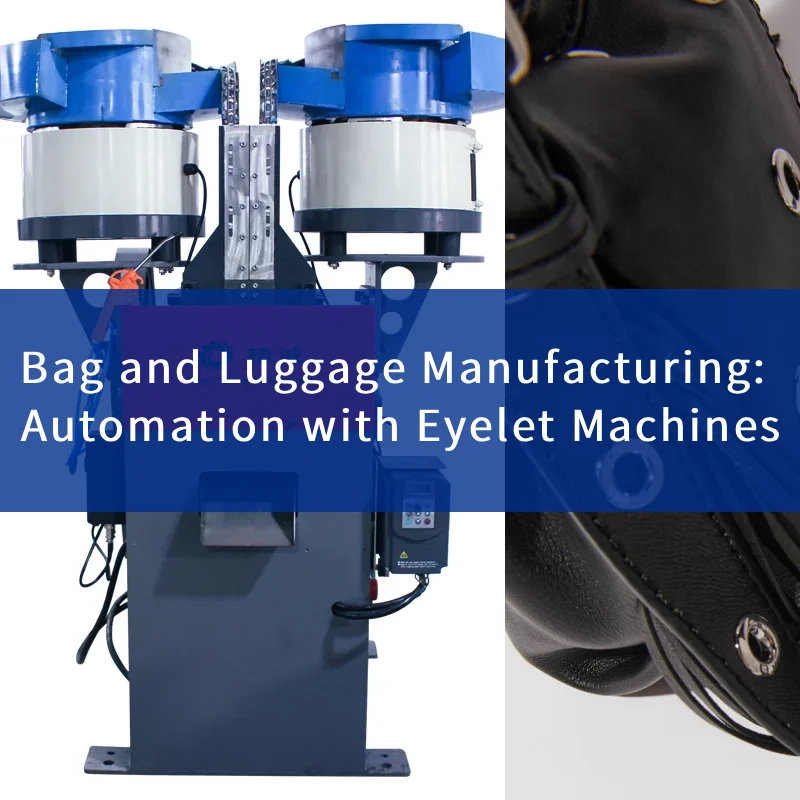
In the ever-evolving world of bag and luggage manufacturing, staying ahead of the curve is essential for success. As industries strive for higher efficiency, precision, and cost-effectiveness, automation is emerging as a game-changer. Among the most impactful innovations is the use of automation eyelet machines, which have revolutionized the way bags and luggage are produced. These machines, designed to fasten eyelets onto fabric or leather, are transforming the industry by enhancing production speed, reducing labor costs, and improving product quality.
In this article, we’ll explore the future of bag and luggage manufacturing, focusing on the role of eyelet machines—both pneumatic and electric versions. As a manufacturer of these advanced machines, you play a crucial role in shaping the future of the industry. We’ll look at the technological advancements, benefits, and challenges associated with automation in eyelet installation, and how these machines are poised to lead the way in modern manufacturing.
Eyelet Machines: The Heart of Bag and Luggage Manufacturing
Eyelets are small but essential components used in bags, luggage, and other fabric-based products. These metal rings are typically placed around holes in materials such as leather, canvas, or synthetic fabrics, and they help reinforce the fabric, preventing it from tearing or fraying. They also serve an aesthetic purpose, adding a decorative touch to the final product.
In traditional manufacturing processes, inserting eyelets was a labor-intensive and time-consuming task. Manual workers used hand tools to install the eyelets one by one, which could lead to inconsistent results and increased production time. However, with the advent of automation eyelet machines, the process has become much more streamlined, allowing manufacturers to improve both efficiency and product quality.
Automation eyelet machines use either pneumatic or electric systems to insert eyelets quickly and accurately, reducing human error and the need for manual labor. These machines are capable of handling a variety of materials and eyelet sizes, making them versatile tools for bag and luggage production.
Pneumatic Automation Eyelet Machines: Precision and Speed
Pneumatic automation eyelet machines use compressed air to operate, providing high-speed performance with exceptional precision. These machines are known for their reliability and consistency, making them ideal for large-scale manufacturing operations.
Key Advantages of Pneumatic Eyelet Machines:
- Speed: Pneumatic machines are incredibly fast. By using air pressure to quickly insert eyelets, they can dramatically increase production speeds compared to manual methods. This helps manufacturers meet high demand and short lead times.
- Precision: Pneumatic machines are designed to ensure each eyelet is placed accurately every time. This minimizes the risk of misalignment or damage to the fabric, which can result from manual installation.
- Cost-Effectiveness: Pneumatic machines typically have lower operational costs due to their simplicity and efficiency. They require less maintenance than more complex electric systems and can be operated with minimal training.
- Flexibility: Pneumatic eyelet machines can handle a variety of materials, including heavy-duty fabrics and soft leathers. This makes them highly versatile for manufacturers that produce different types of bags and luggage.
How Pneumatic Systems Work in Eyelet Machines:
In a pneumatic automation eyelet machine, a valve controls the flow of compressed air to various components, such as the eyelet insertion head and pressing mechanism. The machine’s automation system ensures that the eyelet is correctly positioned and securely fastened to the material, all while maintaining speed and precision.
Manufacturers often prefer pneumatic machines for their reliability and speed, especially in high-volume production environments.
Electric Automation Eyelet Machines: Efficiency and Control
While pneumatic systems have long been favored in the industry, electric automation eyelet machines are gaining ground due to their superior control and efficiency. These machines are powered by electric motors and use advanced electronics to control every aspect of the eyelet insertion process.
Key Advantages of Electric Eyelet Machines:
- Precision and Consistency: Electric eyelet machines offer even more precise control over the insertion of eyelets. With variable settings for pressure, speed, and timing, manufacturers can achieve a level of accuracy that is difficult to match with pneumatic machines.
- Energy Efficiency: Unlike pneumatic systems, which rely on compressed air, electric machines are often more energy-efficient. They do not require an air compressor, which reduces operational costs and energy consumption.
- Customization: Electric machines are highly programmable, allowing manufacturers to easily adjust settings for different materials or product designs. This level of flexibility is particularly beneficial when producing a variety of bags or luggage models.
- Low Maintenance: Electric eyelet machines require less maintenance compared to pneumatic systems because there are fewer moving parts and no need for air compressors. This can save manufacturers time and money on repairs and downtime.
How Electric Systems Work in Eyelet Machines:
In an electric automation eyelet machine, an electric motor powers the insertion head and pressing mechanism. The machine is equipped with a microcontroller or programmable logic controller (PLC), which allows manufacturers to fine-tune the machine’s settings to achieve optimal results. The machine’s sensors provide real-time feedback, ensuring that eyelets are inserted precisely and consistently.
Electric machines are particularly well-suited for manufacturers seeking high-quality results with minimal waste. They are also ideal for operations that need to produce a wide variety of products with different specifications.
The Role of Automation in Enhancing Productivity and Quality
As the bag and luggage manufacturing industry becomes more competitive, companies must find ways to improve both productivity and quality. Automation with eyelet machines provides a significant advantage in these areas.
Increasing Productivity:
By automating the eyelet insertion process, manufacturers can increase production speeds without sacrificing quality. This is particularly important for businesses that need to meet tight deadlines or high-volume orders. Automation reduces the reliance on manual labor, allowing companies to allocate human resources to other critical tasks, such as design, quality control, and customer service.
Furthermore, automation machines can operate continuously, 24/7, with minimal downtime. This ensures that manufacturers can keep up with demand, even during peak production periods.
Improving Quality:
Quality control is a crucial aspect of bag and luggage manufacturing. A poorly inserted eyelet can weaken the structure of the product, leading to defects and customer dissatisfaction. Automation eyelet machines eliminate the inconsistencies of manual labor, ensuring that every eyelet is securely fastened to the material. This improves the overall strength and durability of the product, which is especially important for luggage that needs to withstand heavy use.
With automation, manufacturers can also achieve better consistency in terms of aesthetics. The precision offered by both pneumatic and electric machines ensures that eyelets are aligned perfectly, adding a polished and professional look to each item.
The Future of Eyelet Machines in Bag and Luggage Manufacturing
The future of eyelet machines is closely tied to the ongoing developments in automation and smart manufacturing. As technology continues to advance, we can expect even more innovative features and capabilities in eyelet machines. Here are a few trends to watch out for:
- Integration with Industry 4.0: As part of the broader trend toward smart manufacturing, automation eyelet machines will likely become more connected to the Internet of Things (IoT). This will enable manufacturers to monitor machine performance in real-time, optimize processes, and predict maintenance needs.
- Increased Customization: Future eyelet machines may offer even more customization options, allowing manufacturers to create unique designs or incorporate additional features like decorative stitching or embossing.
- Sustainability: The push for more sustainable manufacturing practices will likely impact the design and operation of eyelet machines. Future machines may be designed with energy efficiency in mind, using less power and generating less waste. Additionally, manufacturers may adopt more eco-friendly materials for the eyelets themselves.
- Artificial Intelligence and Machine Learning: AI-powered systems may become an integral part of eyelet machines, helping to optimize settings, improve efficiency, and predict potential issues before they occur. This could lead to even more intelligent machines capable of adapting to different materials and production requirements on the fly.
Conclusion
As a manufacturer of automation eyelet machines, you are at the forefront of a transformation in the bag and luggage industry. Whether you specialize in pneumatic or electric systems, you are helping businesses streamline their production processes, enhance product quality, and stay competitive in an increasingly fast-paced market.
By investing in automation, manufacturers can improve their bottom line by reducing labor costs, increasing production capacity, and delivering higher-quality products. Eyelet machines, both pneumatic and electric, are not just tools—they are essential components in the future of bag and luggage manufacturing.
As the demand for high-quality, durable products continues to rise, the role of automation will only become more critical. By embracing the future of eyelet machines, manufacturers can ensure they are ready to meet the challenges of tomorrow, driving growth and innovation in an exciting and dynamic industry.