
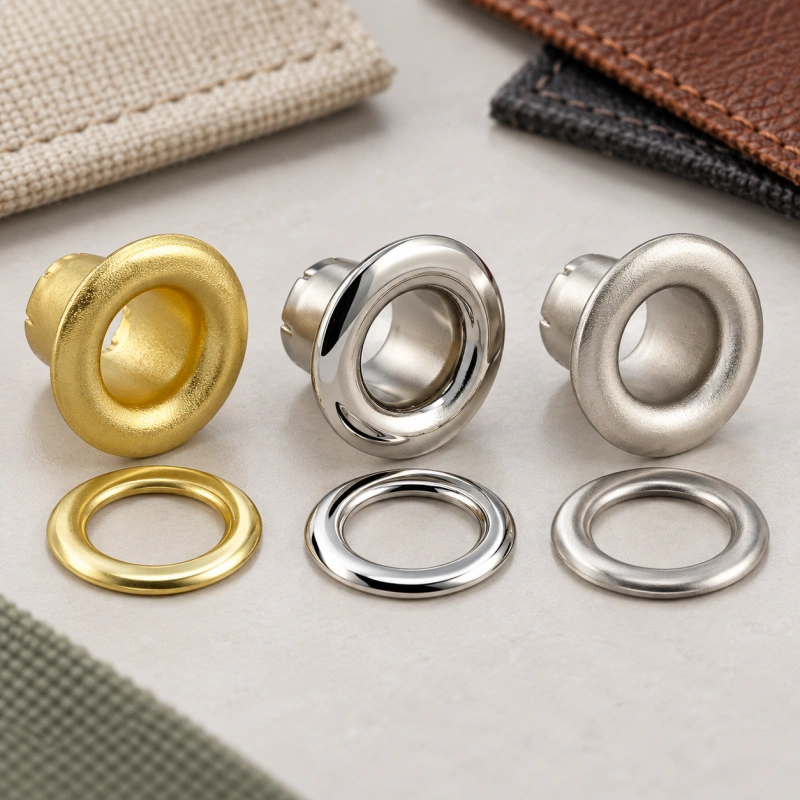
Choose your eyelet material based on the exposure your finished product will face, then confirm the appearance, washer combination and setting process. Brass often deserves consideration for decorative goods and formability.
Coated steel can be a practical candidate in controlled conditions. Stainless steel is worth evaluating when moisture and corrosion drive the specification, provided its grade suits the environment.
When you compare brass vs steel eyelets, the metal name alone cannot tell you how securely the finished assembly will hold. A dry indoor garment and a salt-exposed cover need different decisions. Start with those conditions before comparing quotations.
Brass vs Steel vs Stainless Steel Eyelets: Quick Comparison
Here, “steel” means non-stainless steel, such as a specified low-carbon steel. These are selection considerations, not guaranteed product ratings.
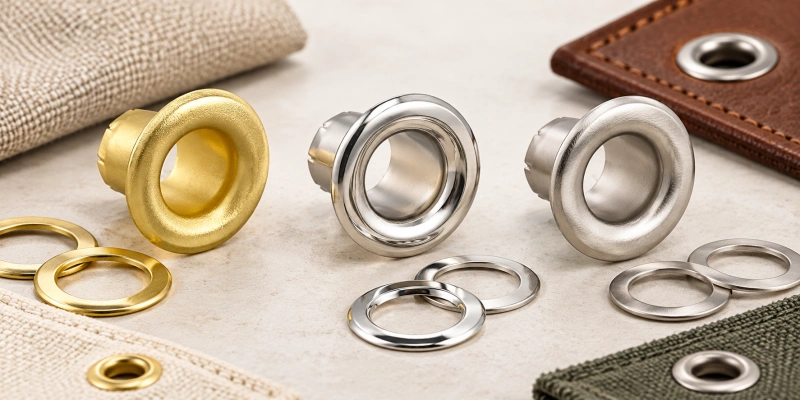
| Selection Factor | Brass Eyelets | Steel Eyelets | Stainless Steel Eyelets |
| Corrosion | No iron rust; tarnishing and other corrosion remain possible. | Bare steel can rust; coating system matters. | Corrosion resistant; grade and exposure still matter. |
| Typical Environment | Indoor goods and some moderate exposures, after verification. | Controlled conditions with suitable protection. | Humid, outdoor or wet service with a qualified grade. |
| Appearance | Natural warm tone or specified finish. | Usually selected with a specified finish. | Polished or other specified surface appearance. |
| Formability | Suitable brass alloys and tempers can form readily. | Grade, hardness, and wall geometry control forming. | Grade and work hardening affect forming response. |
| Finishing Options | Polishing, plating, or coatings, if specified. | Plating or coatings for appearance and protection. | Mechanical finishing or other specified treatment. |
| Setting | Verify barrel rollover and finish marking. | Verify forming response and coating integrity. | Recheck tooling and setup after a material change. |
| Maintenance | Check tarnish, staining, and approved care methods. | Watch for coating wear and rust. | Control deposits, contamination, and unsuitable cleaners. |
| Cost | Compare alloy, finish and production yield. | Compare protection cost as well as unit price. | Compare grade, tooling and service requirements. |
Start With the Application, Not the Metal
Write a short service description before requesting samples. State whether the product stays indoors, sees condensation, gets washed, or encounters rain, salt spray or industrial residues. Include how long moisture can remain beneath the flange and washer, and whether the customer can inspect or replace the hardware.
Then separate cosmetic acceptance from functional acceptance. A decorative eyelet can become unacceptable because it stains pale fabric while still holding securely. An industrial cover may require retention after environmental exposure even when minor discoloration is acceptable. Specify both requirements rather than asking for “rustproof hardware.”
For curtains, distinguish a dry room from a damp installation. For footwear and bags, include perspiration and wet storage. For garments, record the intended care process. Product categories help you shortlist materials; the actual exposure determines what you need to verify.
When Should You Choose Brass Eyelets?
Consider brass eyelets when visible hardware, decorative finishes, and reliable forming are important. Suitable brass alloys in an appropriate temper can offer good cold formability. That makes brass a useful candidate for apparel, leather goods, bags, and indoor textiles, where the barrel must form cleanly without damaging the surrounding material.
Brass does not develop iron rust, but that does not make it corrosion-proof. Its surface can darken or tarnish, and some alloys can suffer dezincification in certain wet environments. Dezincification removes zinc from the alloy and can leave a weakened copper-rich structure. For repeated wetting or salt exposure, ask which alloy is supplied and what evidence supports its use.
Approve the finish after setting and representative care, not only on loose components. On a pale leather bag, a small amount of discoloration or transfer can matter more than a change in the eyelet’s appearance alone.
When Should You Choose Steel Eyelets?
Consider steel when a specified component meets your forming, loading, and finish requirements at an acceptable application cost. Steel eyelets may be economical in stable indoor conditions, but the grade, dimensions, finish, and order quantity determine the quotation.
Bare non-stainless steel is vulnerable to rust when moisture supports corrosion. Plated or coated steel must be assessed as a complete system. Identify the underlying steel, coating type, and any protective topcoat. A decorative finish is not automatically adequate corrosion protection.
Inspect the rolled barrel and contact surfaces after setting. Scratches, cracking, or coating wear can change protection in service. Zinc coatings can provide sacrificial protection, whereas barrier coatings rely on keeping the environment away from the steel. Their behavior is not interchangeable, and neither gives you an unlimited corrosion guarantee.
Steel is not automatically the strongest installed option. Ask for performance evidence on the specified assembly rather than accepting a general strength claim.
When Should You Choose Stainless Steel Eyelets?
Evaluate stainless steel eyelets when humidity, outdoor exposure, repeated wetting, or wash-down makes corrosion resistance a priority. Their resistance comes from a naturally formed chromium-rich passive film, rather than simply a silver-colored coating.
Stainless steel can still corrode. Chlorides, trapped moisture, contamination, and unsuitable chemical exposure can contribute to pitting, crevice attack, or staining. Grade and surface condition therefore belong in your purchasing specification. “Stainless” alone is insufficient for approving salt-exposed hardware.
When comparing brass vs stainless steel eyelets, weigh the required finish and setting behavior alongside exposure. A suitable stainless component may be worth qualifying for wet service, while a brass component may meet a decorative indoor requirement. Obtain the actual alloy or grade designation and supporting documentation from your supplier; do not infer it from a product photo.
How Corrosion and Service Environment Change the Choice?
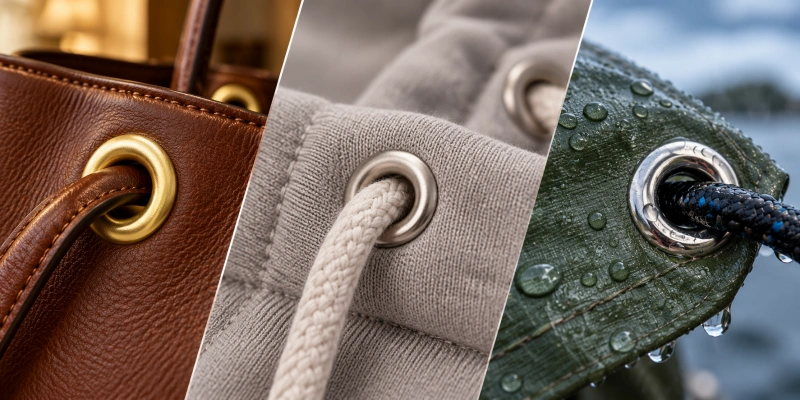
Moisture, Washing and Outdoor Use
Occasional splashing, repeated washing and prolonged damp storage are different exposures. Record the intended cleaning products, temperature and drying conditions. Test the eyelet, washer and actual textile together using the agreed care procedure. Inspect for stains, finish changes, loose hardware and damage around the opening.
For outdoor products, include rain, condensation and wet storage as well as sunlight. A coating that looks satisfactory before installation may behave differently after forming and abrasion. Plan environmental checks on installed samples, particularly where water can remain under the washer.
Salt and Industrial Exposure
For a marine cover, describe salt spray versus immersion, wetting frequency, and cleaning access. Shortlist a stainless grade supported for those conditions, or a brass alloy with relevant evidence. Do not approve either from its material family alone.
In industrial service, identify chemicals or residues that may contact the hardware. A material suitable for humid air is not necessarily suitable for a cleaning chemical or process contaminant. Ask for compatibility evidence for the actual exposure rather than relying on “industrial grade.” No universal salt-spray duration or outdoor service life applies to all eyelets.
Base Metal vs Surface Finish: Why the Difference Matters
Specify two separate items: the metal forming the eyelet body and the treatment on its surface. Nickel plating, zinc plating, paint, and decorative finishes are not base metals. Polishing changes surface appearance without changing the underlying alloy.
A silver-colored eyelet could be plated brass, plated steel, or stainless steel. A brass-colored finish does not prove a brass substrate. Plated steel remains steel beneath its coating; it does not become stainless steel.
Request the base material and finish as separate purchase-order fields. Add an approved appearance sample and any required finish performance. Check loose and installed pieces, because feeding and forming can mark the surface. Where hardware contacts skin, include applicable buyer requirements for the finished component and request supporting compliance documentation.
How Eyelet Material Affects Strength, Setting and Tooling
Compare Installed Performance
Base-metal tensile strength is not the same as eyelet pull-out strength. Retention also depends on flange geometry, wall thickness, barrel length, temper or hardness, washer design, substrate reinforcement, hole preparation, and setting quality. Load direction and repeated loading can change the failure mode.
A harder eyelet cannot compensate for an oversized hole or an inadequately reinforced textile. Compare candidates on representative assemblies using an agreed test method and acceptance criteria. Record whether the metal deforms, the flare opens, the washer releases, or the substrate tears. That result tells you what to improve.
Requalify the Forming Process
Changing metal or material condition can change barrel rollover, forming resistance, and springback. Austenitic stainless steels can work-harden during forming, but stainless grades do not all behave identically. Brass and non-stainless steel also require a suitable alloy, temper and geometry.
Recheck the component drawing, matched dies, feed arrangement, and approved machine setup before a trial. Do not assume that switching from brass to stainless only requires more pressure. Additional force can damage the substrate or component without correcting a mismatch.
The guide to matching eyelet, washer and die dimensions covers the separate dimensional matching task. For a material change, qualify the exact combination. Stop and isolate the machine as required by your factory procedures before die inspection or adjustment.
Match the Eyelet and Washer Materials Carefully
Treat eyelets and washers as one assembly specification. A corrosion-resistant eyelet does not establish the durability of an unidentified washer. Confirm both materials, finishes, geometry and setting compatibility.
Different metals do not automatically create galvanic corrosion. A galvanic couple needs an electrical connection between metals with a relevant potential difference and an electrolyte, such as conductive moisture, completing the corrosion circuit. The exposure and relative exposed areas also affect the risk. Review mixed-metal combinations for wet or salty service.
Using compatible materials can reduce one concern, but matching the metal names does not guarantee fit or retention. Test the actual leather, fabric, or coated substrate for discoloration, coating transfer, and care compatibility as well. Keep detailed washer sizing within the separate matching specification.
Brass, Steel or Stainless Steel: Which Should You Consider?
Use this table to shortlist samples. It does not replace approval of the finished assembly.
| Application Condition | Material Often Considered | Why | What You Still Need to Verify |
| Dry Indoor Garment or Curtain | Brass; suitably finished steel. | Appearance and forming may drive selection. | Finish, local moisture and retention. |
| Leather Bag or Footwear | Brass; finished steel; stainless where exposure warrants it. | Appearance, perspiration and wet storage vary. | Staining, abrasion and hardware compatibility. |
| Frequently Washed Textile | Qualified brass or stainless; coated steel only with relevant evidence. | Care can alter corrosion and finish behavior. | Actual cleaning cycle, drying and retention. |
| Outdoor Tarpaulin or Cover | Qualified brass or stainless; coated steel where evidence supports it. | Rain, condensation and wear matter. | Washer, wet storage and loading after exposure. |
| Humid Industrial Product | Stainless grade or another documented metal and finish system. | Moisture and contaminants drive the specification. | Chemicals, deposits and maintenance access. |
| Salt-Exposed or Marine Product | Stainless grade or brass alloy qualified for the exposure. | Material family alone cannot establish suitability. | Chlorides, crevices, care and installed performance. |
Compare Total Application Cost
Request quotations against the same drawing, finish, washer requirement, and quantity. Alloy, thickness, dimensions, finishing, tooling and supplier terms can change the price; a fixed steel–brass–stainless cost ranking is unreliable.
Compare the cost per accepted assembly, including components, setup, rejects and inspection. Then consider replacement, staining complaints and warranty costs under the intended service conditions. If a cheaper eyelet needs extra sorting or fails the agreed exposure test, its unit-price advantage may disappear.
Conversely, a more expensive metal adds no useful value if a lower-cost qualified assembly already meets the requirement. Keep cost decisions tied to evidence and required service life.
A Practical Eyelet Material Selection Checklist
Before approving a material, confirm:
- Indoor or outdoor use and expected service life.
- Water, humidity, salt and contaminant exposure.
- Washing, cleaning and drying conditions.
- Cosmetic limits and functional acceptance criteria.
- Required appearance, base metal and separate finish.
- Washer material, finish and mechanical fit.
- Substrate, reinforcement and local stack thickness.
- Load direction, repeated loading and retention requirements.
- Die compatibility and approved machine configuration.
- Sample-test results and documented supplier specifications.
Test the Complete Eyelet Assembly Before Production
Set trial samples using the intended eyelet, washer, substrate, die, and machine configuration. Include representative material variation and all relevant finishes. Inspect both faces for rollover, gaps, unintended cracks, sharp edges, movement, and substrate damage. Use your eyelet setting inspection standard to document product-specific limits.
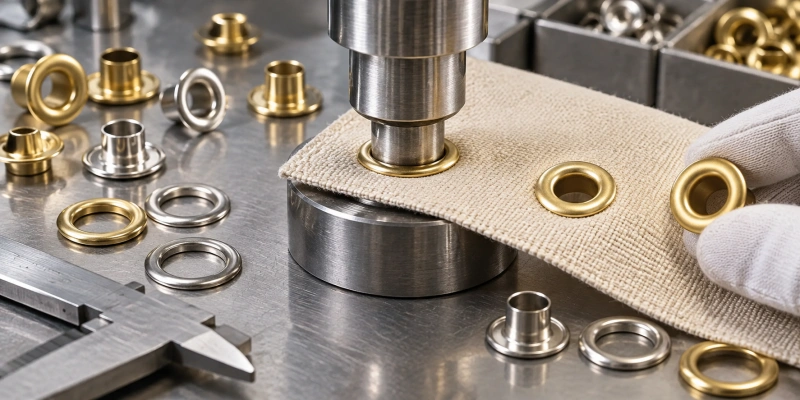
Perform the agreed retention or functional test and relevant care or environmental checks. Where exposure could change performance, inspect and test after exposure as well. Decide sample quantity, conditions, and pass criteria with your engineering team or customer; a neat front flange is not sufficient evidence.
Retain the approved sample, component lot, material designation, finish, washer part number, tooling identity, and setup record. Recheck changes in material, supplier, or finish before releasing them into production.
FAQs
Are Brass Eyelets Better Than Steel Eyelets?
They may suit decorative or formability-led requirements, but neither is universally better. Compare corrosion exposure, finish, installed retention and cost on your specified assembly.
Do Steel Eyelets Rust?
Non-stainless steel can rust in corrosive conditions. Suitable coatings can provide protection, but coating type, condition and exposure determine performance.
Are Stainless Steel Eyelets Suitable for Outdoor and Marine Use?
They are candidates, provided the grade and complete assembly are qualified for the exposure. Salt and trapped moisture can still cause corrosion; “stainless” is not a marine-use guarantee.
Is Plated Steel the Same as Stainless Steel?
No. Plated steel has a surface layer over a steel substrate. Stainless steel is a distinct alloy family with corrosion resistance associated with its passive film.
Can You Use the Same Dies for Brass and Stainless Steel Eyelets?
Possibly, if the exact components and tooling are compatible and trials pass. Matching nominal sizes does not establish compatibility. Confirm the die and setup with your equipment supplier.
Discuss Your Material and Setting Requirements With QC Machinery
Send your application details to QC Machinery for a material and setting discussion. Include the substrate and local thickness, eyelet and washer specifications, required appearance, indoor or outdoor use, moisture and salt exposure, cleaning conditions, current tooling and machine, and expected production volume.
Provide physical samples where possible. The discussion should connect the application environment with the eyelet, washer, substrate, tooling and machine setup, so you can qualify a suitable combination before production.