

In your daily production environment, consistency is everything. Whether you are manufacturing garments, bags, tents, tarpaulins, or other products that rely on rivets, snaps, or grommets, you already know how quickly small defects can grow into large problems. A loose rivet, an uneven eyelet, or a cracked fabric edge does not just affect one product—it can lead to rework, customer complaints, and even damage to your brand reputation.
Very often, these issues are not caused by the material itself or by operator error, but by something less visible: improper tension and pressure in your pneumatic presses. Even when you are using a high-quality machine, such as those produced by QC Machinery, performance is only guaranteed when the core parameters are correctly checked and maintained.
In this guide, you will learn why checking tension and pressure is essential, how these parameters affect riveting quality, and how you can systematically inspect and adjust your pneumatic presses to keep your production stable, efficient, and reliable over time.
Why “Stability” Starts with Every Precise Check
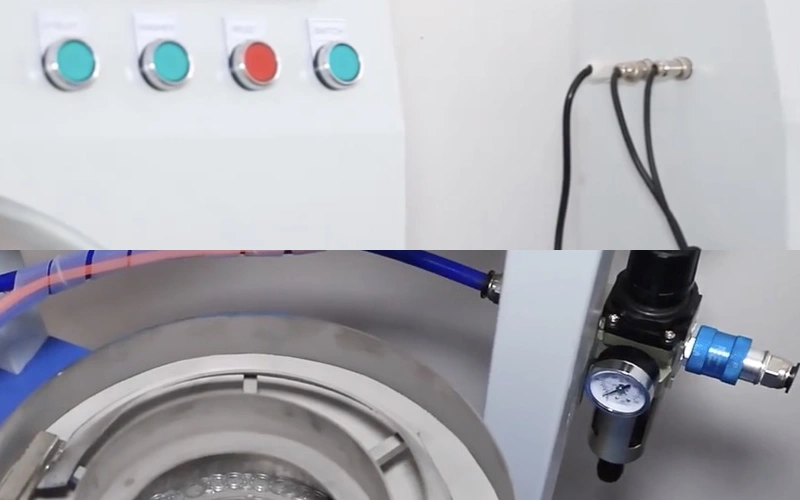
Imagine this scenario: your production line is running at full speed, but suddenly you notice a rising defect rate. Rivets feel loose, eyelets are not seated evenly, or finished products fail pull tests. At first, the problem seems random. Materials look fine, operators follow standard procedures, and the machine itself is not visibly damaged.
Yet when you look deeper, the root cause often traces back to small deviations in tension or air pressure.
As a user of pneumatic presses, you rely on compressed air to deliver fast, repeatable force to the punch and die. When pressure drifts or mechanical tension changes, the result is inconsistent energy transfer. Even a small fluctuation can mean the difference between a clean, firm rivet and a weak or over-compressed joint.
This is why regular checking is not an extra task—it is a core production habit. By checking tension and pressure routinely, you protect three critical aspects of your operation:
- Product consistency, so every rivet meets the same standard
- Production efficiency, by reducing downtime and scrap
- Equipment lifespan, by preventing unnecessary mechanical stress
Even a well-designed machine, including those built by QC Machinery, needs correct calibration to perform at its best. Stability is not accidental—it is maintained through discipline and understanding.
Understanding Tension and Pressure: The Lifelines of Pneumatic Riveting
Before you can check and adjust anything, you need to clearly understand what “tension” and “pressure” mean in the context of pneumatic presses used for riveting, eyeleting, and snap fastening.
What Pressure Really Means in Your Pneumatic Press
Pressure refers to the air pressure supplied by your compressed air system, which drives the main pressing action. This pressure determines the instantaneous force applied by the punch onto the rivet, eyelet, or button.
If pressure is too low, you may see:
- Rivets that feel loose after setting
- Incomplete forming of eyelets
- Poor appearance and low pull strength
If pressure is too high, you risk:
- Cracked or deformed rivets
- Damaged fabrics or substrates
- Accelerated wear of punches and dies
When QC Machinery highlights features such as “fast and stable riveting speed” and “neat riveting results,” those benefits are only possible when pressure is kept within an optimal, controlled range.
How Tension Affects Accuracy and Feeding
Tension, in this context, does not usually refer to air pressure. Instead, it relates to the mechanical preload and coordination of moving parts, such as:
- Feeding systems and vibration bowls
- Guide rails and tracks
- Clamps, fixtures, and alignment components
Correct tension ensures that every rivet or grommet arrives at the punch in the correct position and orientation. When tension is incorrect, feeding becomes unstable. You may experience misfeeds, jams, or off-center riveting—even if air pressure is correct.
Together, pressure and tension form the foundation of stable pneumatic operation. One cannot compensate for the other.
How Tension and Pressure Directly Impact Riveting Quality
Once you understand these parameters, it becomes easier to see how closely they are tied to machine performance.
When pressure is stable and mechanical tension is balanced:
- Riveting speed remains consistent
- Each stroke delivers the same forming energy
- Finished products look uniform and professional
When either parameter drifts:
- Riveting force becomes unpredictable
- Feeding timing may fall out of sync
- Defects appear gradually, then suddenly escalate
This is why professional manufacturers do not rely on “set it once and forget it.” They build checking routines into daily and weekly workflows. By doing so, they ensure that machines continue to deliver the performance promised by their design.
Practical Guide: How You Check and Adjust Tension & Pressure Systematically
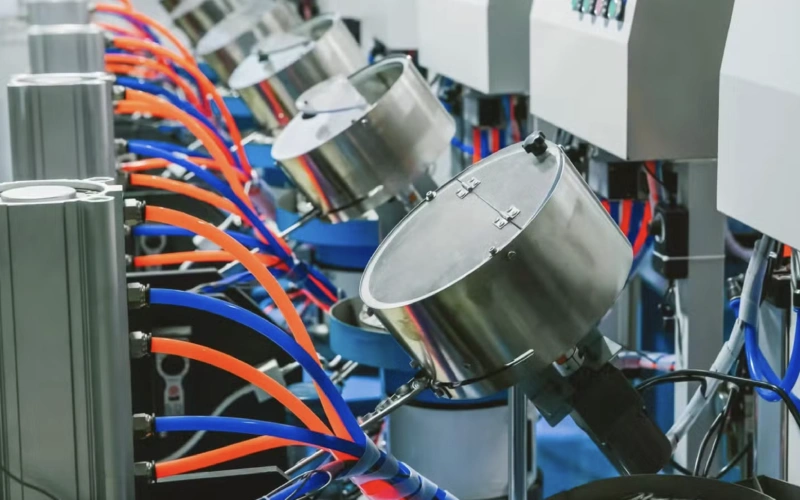
This section is the operational core of your maintenance strategy. By following a structured approach, you can turn checking into a simple, repeatable process rather than a reactive troubleshooting exercise.
Preparation: Safety and Readiness First
Before you begin any inspection or adjustment, you should always prioritize safety.
You should:
- Shut off the air supply and disconnect power
- Release residual air pressure from the system
- Prepare basic tools such as a pressure gauge, hex keys, and cleaning cloths
- Confirm your machine model and reference the technical documentation
QC Machinery provides detailed documentation and support for its equipment, which makes it easier for you to identify recommended pressure ranges and adjustment points.
Step 1: Checking and Calibrating Air Pressure
Pressure is usually the first parameter you should verify, as it directly affects riveting force.
You start by:
- Inspecting the main air regulator and pressure gauge
- Confirming that the reading matches the recommended operating pressure
If pressure is unstable, you should:
- Check for air leaks in hoses and connectors
- Ensure filters and regulators are clean and functioning properly
Once baseline pressure is set, you should perform test riveting.
You can:
- Rivet sample parts at slightly different pressures
- Observe the forming quality, firmness, and appearance
- Identify the pressure point that delivers the best balance between strength and surface finish
This testing step connects theory to reality. It allows you to fine-tune pressure based on actual product requirements rather than assumptions.
Step 2: Inspecting Mechanical “Tension” and Alignment
After pressure is stable, you turn your attention to mechanical components that influence feeding and alignment.
Feeding System Checks
You should inspect:
- Vibration bowls for debris or abnormal wear
- Tracks and rails for smooth, unobstructed movement
- Feeding speed and rhythm for consistency
QC Machinery often emphasizes “uniform rotation of the bowl” and “orderly arrangement of eyelets.” These features only perform as intended when mechanical tension and cleanliness are maintained.
Punch and Die Condition
Next, you check:
- Whether punches and dies are securely fastened
- Signs of wear, chipping, or misalignment
- Vertical alignment between punch and die
Misaligned tooling increases stress on both the rivet and the fabric. Over time, this leads to poor appearance and higher failure rates.
Clamps and Fixtures
Finally, you ensure:
- The workpiece is held firmly during pressing
- There is no slippage or movement under force
- The clamping pressure is appropriate for the material thickness
Stable holding is essential for consistent riveting, especially when working with layered or flexible materials.
Step 3: Record Keeping and Maintenance Cycles
Checking once is not enough. What truly improves long-term performance is consistency.
You should consider:
- Creating a simple inspection checklist
- Recording pressure settings and observations
- Scheduling daily, weekly, and monthly checks
Over time, these records help you identify trends before they become problems. You also gain confidence in your process, which supports higher production standards and easier training for new operators.
Beyond Checking: Why Machine Design Still Matters
While good maintenance unlocks performance, you should also recognize that machine design sets the upper limit of stability and consistency.
Even with perfect checking routines, a poorly designed pneumatic press will always struggle with:
- Pressure fluctuation
- Uneven force distribution
- Rapid mechanical wear
This is where equipment choice becomes critical.
QC Machinery addresses these challenges by:
- Applying strict quality control to pressure mechanisms
- Producing and testing key structural components in-house
- Conducting multiple tests before delivery
As a result, their pneumatic presses and eyelet machines are inherently more stable. This reduces how often you need to adjust parameters and lowers the risk of unexpected downtime.
When you invest in a machine that is “stable by design,” your checking routine becomes preventive rather than corrective.
FAQ
Why is regular checking of tension and pressure so critical for pneumatic presses in mass production?
Regular checking of tension and pressure is critical because even small deviations can cause large variations in riveting quality over time. In mass production, these variations lead to loose rivets, fabric damage, higher scrap rates, and customer complaints. Consistent checks help you maintain stable output, predictable quality, and protect your long-term production efficiency and equipment lifespan.
How does incorrect air pressure directly affect riveting and eyelet installation results?
Incorrect air pressure directly changes the forming force applied during each press cycle. If pressure is too low, rivets and grommets may not be securely set, resulting in weak joints. If pressure is too high, materials can crack or deform. Maintaining the correct pressure ensures clean appearance, proper holding strength, and reduced tool wear.
What does “tension” mean in pneumatic press operation, and why do operators often overlook it?
In pneumatic press operation, tension refers to the mechanical balance and preload of feeding systems, guides, clamps, and alignment components. Operators often overlook it because it is less visible than air pressure. However, incorrect tension causes feeding instability, misalignment, jams, and inconsistent riveting—even when air pressure settings appear correct.
How often should industrial users inspect tension and pressure on pneumatic presses?
Inspection frequency depends on production intensity, but as a best practice, pressure should be checked daily and mechanical tension weekly. High-volume or critical applications may require more frequent checks. Establishing a documented inspection routine helps prevent sudden failures, supports consistent quality, and reduces unplanned downtime in industrial environments.
Can proper checking reduce maintenance costs and extend the life of pneumatic presses?
Yes, proper checking significantly reduces maintenance costs and extends machine life. Stable pressure and balanced tension reduce unnecessary stress on punches, dies, seals, and moving parts. This lowers wear rates, minimizes unexpected breakdowns, and helps you avoid costly emergency repairs or premature replacement of critical components.
Conclusion
When you look at your production line as a whole, it becomes clear that checking tension and pressure is the bridge between advanced pneumatic presses and high-quality finished products.
you place yourself in control of quality rather than reacting to defects.
For existing users of QC Machinery equipment, this guide encourages you to formalize your inspection process and make full use of original technical support when needed. For potential buyers, it reminds you to look beyond speed and price, and to evaluate how precisely a machine controls pressure and mechanical stability.
After all, consistent riveting quality is not achieved by chance—it is built stroke by stroke, check by check, and decision by decision.