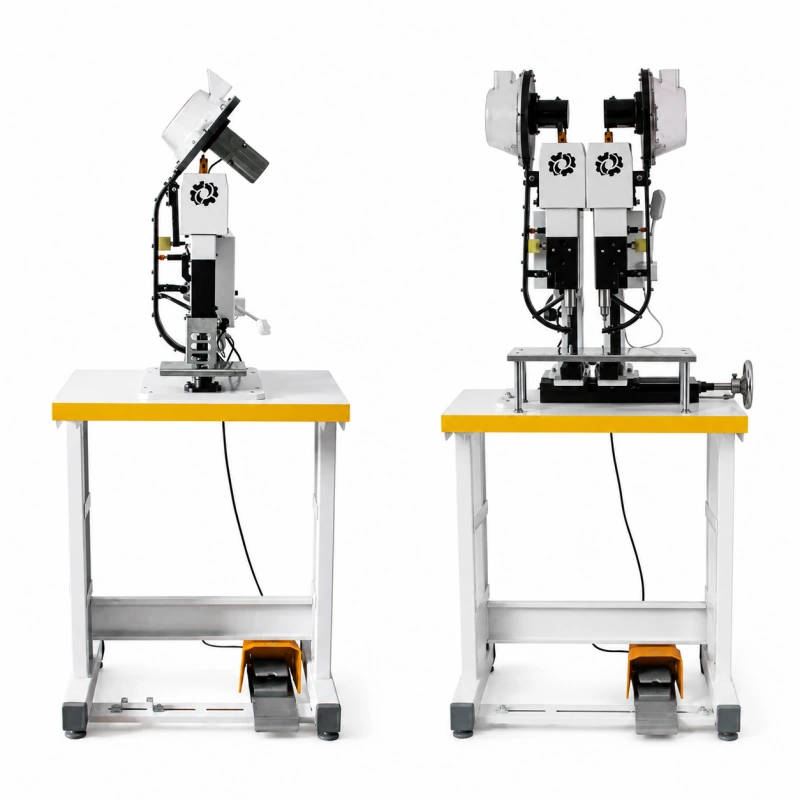
You often face a critical decision when choosing between single-head and double-head eyelet machines. QC Machinery’s experience shows that double-head models usually deliver a stronger ROI for medium-to-high volume operations.
You should weigh your production scale, material type, and long-term goals before making a choice. The single-head vs double-head eyelet machine: roi comparison highlights how productivity and application fit drive your success.
You want every investment to maximize returns—single-head vs double-head eyelet machine:roi comparison helps you achieve that.
Key Takeaways
- Double-head eyelet machines typically offer a stronger ROI for medium-to-high volume production due to higher throughput and lower per-unit costs.
- Consider your production scale and material type when choosing between single-head and double-head machines to ensure the best fit for your needs.
- Investing in a double-head machine can lead to significant labor savings and increased efficiency, processing over 60 eyelets per minute compared to under 30 for single-head models.
- Evaluate the total cost of ownership, including maintenance and hidden costs, to make an informed decision that maximizes your investment.
- Always test your materials with demo machines and verify warranty terms to ensure reliable performance and support after purchase.
ROI Overview: Single-Head vs Double-Head Eyelet Machine
ROI Factors for Eyelet Machines
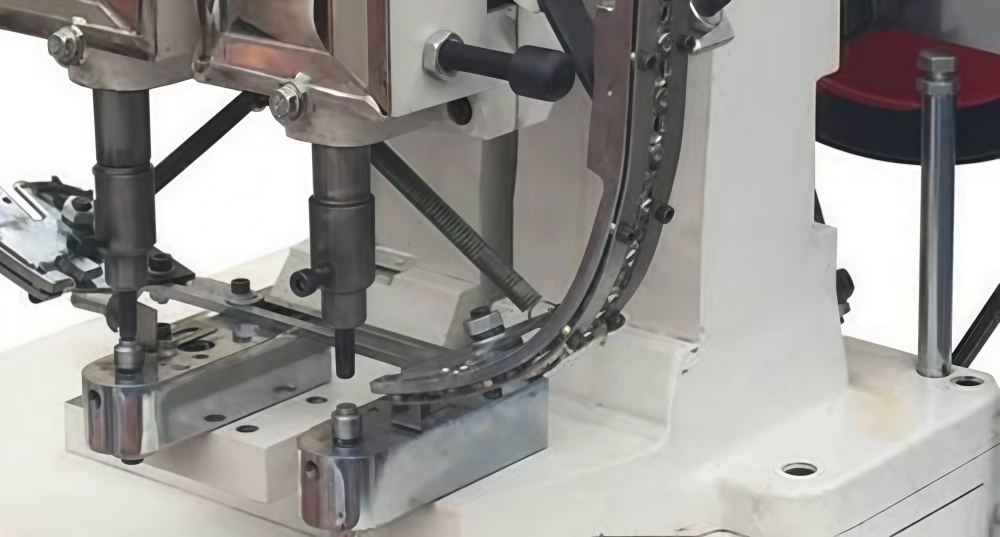
You want your investment to deliver maximum returns. The single-head vs. double-head eyelet machine ROI comparison starts with understanding the factors that influence ROI. You must look at productivity, cost, and application suitability. These elements shape your decision and impact your bottom line.
When you compare machines, you see that productivity drives ROI. Double-head eyelet machine models offer higher throughput. You can process more units in less time. This advantage matters most in large-scale production environments. Single-head eyelet machine models work best for precision tasks and custom jobs.
You get flexibility but slower output.
Cost is another key factor. You pay more upfront for a double-head eyelet machine, but you save on per-unit production costs. You spend less on labor and maintenance over time. Single-head eyelet machine options cost less initially, but you incur higher per-unit costs as you scale up production.
You also need to consider hidden costs like training, die replacement, and manual labor.
Application suitability affects ROI. Double-head eyelet machine models fit industries with high-volume needs. You use them for textiles, packaging, and accessories. Single head eyelet machine models suit small workshops and hobbyists. You choose them for custom projects and low-volume runs.
Here is a table that shows the primary ROI factors for both machine types:
| Cost Factor | Double Head Eyelet Machine | Single Head Eyelet Machine |
|---|---|---|
| Initial Purchase Price | $12,000–$20,000 | $4,000–$8,000 |
| Annual Maintenance | $1,200 | $1,800 |
| Replacement Frequency | Every 4–6 years | Every 2–3 years |
| Per-Unit Production Cost | 30–50% lower | Higher for large volumes |
| Hidden Costs | Training, die replacement | Manual labor, repair |
You see that the single-head vs double-head eyelet machine: roi comparison depends on your production goals and budget. You must weigh these factors before you invest.
QC Machinery’s Double Head Eyelet Machine ROI
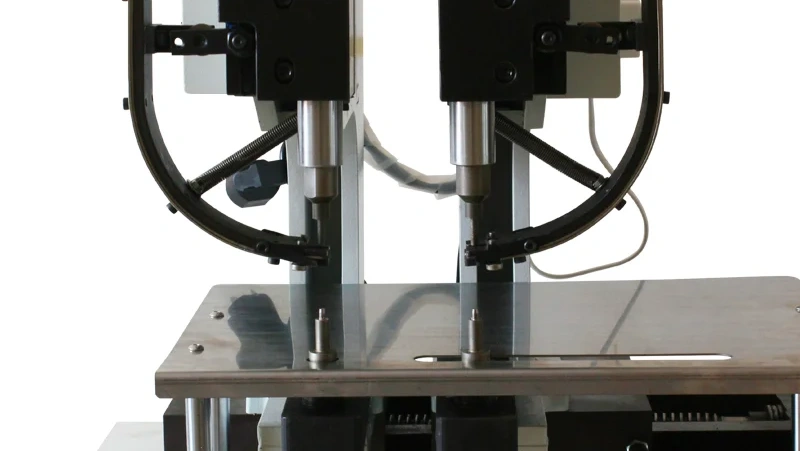
You want a machine that boosts productivity and lowers costs. QC Machinery’s double-head eyelet machine stands out in the single-head vs double-head eyelet machine: roi comparison. You get dual-head operation, which lets you punch and press two eyelets at once. You double your output without doubling your labor.
You benefit from adjustable hole spacing and a customizable workbench. You can adapt the machine to different products and materials. You save time and reduce waste. The robust motor and durable construction mean you spend less on maintenance. You get reliable performance year after year.
You see lower per-unit production costs. You use less manual labor and achieve consistent quality. You meet industry standards for textiles, packaging, and accessories. You scale your business without sacrificing precision.
- Double head eyelet machine models deliver:
- Higher throughput for large-scale production
- Lower per-unit costs in commercial settings
- Versatility for various materials and applications
- Reduced maintenance and longer replacement cycles
You find that QC Machinery’s double-head eyelet machine offers a strong ROI. You maximize efficiency and minimize operational costs. You gain a competitive edge in your industry.
You must consider your production volume, material type, and business goals. The single-head vs. double-head eyelet machine ROI comparison helps you choose the right solution. You invest in a machine that fits your needs and delivers long-term value.
Efficiency and Cost Analysis
Initial Investment and Operating Costs
You need to consider both the initial investment and ongoing expenses when choosing an eyelet machine. The single-head eyelet machine usually requires a lower upfront payment. You pay between $4,000 and $8,000 for a basic model.
The double-head eyelet machine costs more, with prices ranging from $12,000 to $20,000. You also need to factor in maintenance and replacement cycles. Double-head models often have longer lifespans and lower annual maintenance costs. You spend less on repairs and replacements over time, which improves cost efficiency.
Productivity and Labor Savings
Production efficiency drives your ROI. The double-head eyelet machine can process two eyelets at once, doubling your output. You achieve speeds above 60 eyelets per minute, while single-head eyelet machine models stay below 30 eyelets per minute.
You automate feeding and punching, which reduces labor requirements. You save time and minimize manual intervention. The double-head machine increases efficiency by 8-15 times compared to manual operation.
You benefit from enhanced work efficiency and faster production cycles. The double-head eyelet machine lets you scale up without increasing labor costs.
| Feature | Single-Head Model | Double-Head Model |
|---|---|---|
| Maximum Speed | Below 30 eyelets/min | Above 60 eyelets/min |
| Number of Eyelets Processed | 1 at a time | 2 at a time |
| Efficiency | Lower | Higher |
Cost per Unit Comparison
Cost efficiency matters for every manufacturer. The double head eyelet machine reduces production cost per unit by automating key steps and minimizing errors. You use features like automatic light-sensitive unwinding, roller guides, and fast positioning.
These innovations lower labor costs and speed up production. You also benefit from anti-static and dust cleaning functions, which reduce maintenance expenses.
| Feature | Contribution to Cost Reduction |
|---|---|
| Automatic light-sensitive unwinding | Reduces manual intervention, lowering labor costs. |
| Automatic roller guide | Enhances efficiency, minimizing production time. |
| Anti-static and dust cleaning function | Reduces maintenance costs and improves machine longevity. |
| Fast positioning and punching | Increases production speed, lowering cost per unit. |
| CCD image positioning, high precision | Minimizes errors, reducing waste and rework costs. |
You see that the double-head eyelet machine delivers superior cost efficiency and production efficiency. You achieve lower production cost per unit and higher throughput. The single-head eyelet machine suits smaller operations, but you gain more value with double-head models for medium-to-high volume production.
Durability and Maintenance ROI
Machine Lifespan and Reliability
You want your eyelet machine to last and perform reliably. Machine reliability directly impacts your ROI in industrial applications. Reliable machines minimize misfires and jams, which reduces scrap rates and material waste. You avoid costly rejects and wasted materials at the end of production.
High reliability leads to lower maintenance costs and better profit margins. Misalignment or failure can result in expensive repairs and lost productivity. When you choose a machine with a strong track record, you protect your investment and ensure consistent output.
- Reliable machines minimize misfires and jams, reducing scrap rates and material waste.
- High reliability leads to lower maintenance costs, contributing to better ROI.
- Misalignment or failure can result in costly rejects, severely impacting profit margins.
- The cost of ruined materials can outweigh initial savings from purchasing cheaper machines.
You need to consider the Total Cost of Ownership (TCO). TCO includes not only the initial purchase price but also ongoing costs such as energy, maintenance, and scrap material over the machine’s lifecycle. A durable machine reduces these expenses and delivers long-term value.
Maintenance and Long-Term Costs
You must look beyond the upfront price. Effective quality assurance and control practices can significantly lower long-term maintenance costs. QC Machinery’s machines meet ISO9001 standards and carry CE certification. These certifications show that you get a product built for durability and reliability.
You benefit from fewer defects and less need for rework. Poor quality leads to frequent repairs and replacements, which increase lifecycle costs. When you invest in QC Machinery’s double-head eyelet machine, you gain a robust motor and sturdy construction.
You spend less on maintenance and enjoy stable performance year after year.
Tip: Always factor in maintenance schedules and replacement cycles when calculating ROI. Machines with strong quality standards help you avoid unexpected expenses and keep your operations running smoothly.
You see that durability and maintenance play a crucial role in maximizing ROI. Choosing a machine with proven reliability and certified quality ensures you get the best value for your investment.
Application Scenarios and Suitability
Best Uses for Single-Head Machines
You often choose a single-head eyelet machine for jobs that require precision and flexibility. This machine works well in small workshops and custom production environments. You handle materials like brass, aluminum, and steel.
You find this machine ideal for detailed work in apparel, footwear, automotive, electronics, packaging, and home textiles. You can see the best fit for each industry and material in the table below:
| Industry | Materials Used |
|---|---|
| Apparel | Brass, Aluminum, Steel |
| Footwear | Brass, Aluminum, Steel |
| Automotive | Brass, Aluminum, Steel |
| Electronics | Brass, Aluminum, Steel |
| Packaging | Brass, Aluminum, Steel |
| Home Textiles | Brass, Aluminum, Steel |
You use a single head eyelet machine when you need to process small batches or create custom designs. You rely on this machine for tasks where accuracy matters more than speed.
Double Head Eyelet Machine Applications by QC Machinery
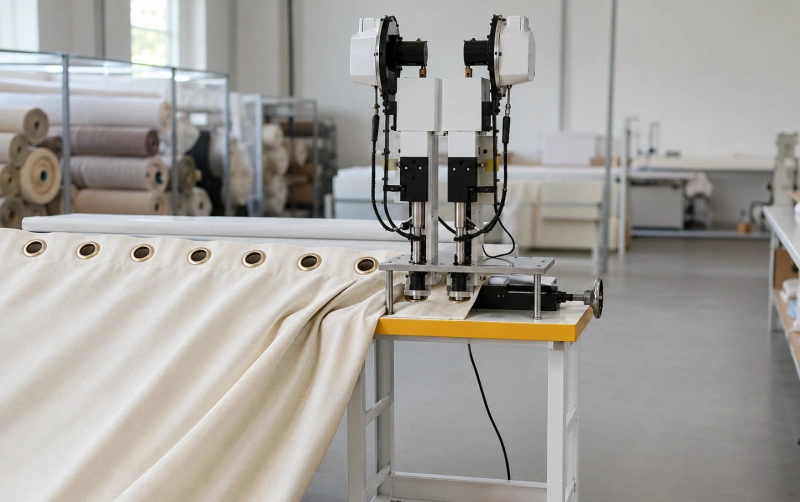
You turn to a double head eyelet machine when you need high-volume production and consistent results. QC Machinery’s model helps you punch and press two eyelets at once. You increase productivity and maintain symmetry.
You use this machine in curtain manufacturing, tarpaulin production, banner printing, textile processing, industrial fabric products, PVC banners, industrial covers, and fabric ventilation panels. You benefit from features like adjustable hole spacing and a customizable workbench.
You adapt the machine to different materials and product requirements.
- Curtain manufacturing
- Tarpaulin production
- Banner printing
- Textile processing
- Industrial fabric products
- PVC banners
- Industrial covers
- Fabric ventilation panels
You achieve faster output and reduce manual labor. You meet industry standards for quality and durability.
Versatility Across Industries
You need machines that adapt to changing demands. QC Machinery’s double head eyelet machine offers customization options that enhance versatility. You adjust the margin from 60 to 160mm and set hole distances between 2.5 and 10mm. You use automatic feeding systems to boost efficiency.
You customize settings for various fabric types and designs. You benefit from recent advancements in technology that improve efficiency in eyelet production. You use a snap button machine and a rivet machine for specialized tasks in apparel, bags, and industrial products.
You rely on these machines to handle diverse materials and meet customer preferences.
| Feature | Description |
|---|---|
| Adjustable Margin | Flexibility for different material sizes |
| Hole Distance | Precise and consistent punching |
| Automatic Feeding | Enhanced efficiency and versatility |
| Customizable Settings | Adaptation for various fabric types and designs |
You gain a competitive advantage by using machines that scale with your business. You streamline operations with snap button machine and rivet machine solutions. You meet the needs of multiple industries and deliver consistent quality.
Market Data and User Insights
Industry Trends and Adoption
You see a shift in the manufacturing industry toward automation and efficiency. Companies in textiles, packaging, and accessories now prioritize machines that deliver consistent quality and faster production. You notice that double-head eyelet machines gain popularity in medium-to-high volume operations.
Manufacturers want to reduce labor costs and minimize waste. You find that QC Machinery’s eyelet machines meet these demands with advanced features and reliable performance.
You observe that adoption rates for automated eyelet machines continue to rise. Businesses in over 60 countries choose QC Machinery for its durability and versatility. You recognize that clients in Europe, Southeast Asia, and South America value the ability to scale production without sacrificing precision.
You understand that industry standards and regulatory requirements push companies to invest in certified machinery. QC Machinery’s ISO9001 and CE certifications assure you of quality and safety.
You benefit from global trends that favor automation and sustainable production. QC Machinery’s reputation for innovation and customer satisfaction positions you for success in a competitive market.
User Feedback on ROI
You want proof that your investment pays off. QC Machinery’s global customer base provides strong feedback on ROI. You see clients report rapid cost recovery and significant efficiency gains. You read testimonials from diverse industries that highlight reliability and productivity.
| Client Type | Evidence of Performance |
|---|---|
| Shoemaker, Italy | “We doubled our production in three months after installing this machine.” |
| Stationery Wholesaler, USA | “The reliability is unmatched. We haven’t had downtime in over a year.” |
| Client in India | Output increased by 300% and labor costs dropped by 40% after switching from five manual presses to one automatic machine. |
- Cost Savings: You recover costs in one month through labor reduction and waste cuts.
- Efficiency: You process 1,200 eyelets per hour compared to 200 manually.
You see that QC Machinery’s eyelet machines deliver measurable ROI. You gain faster output, lower labor costs, and reliable performance. You join a global network of satisfied clients who trust QC Machinery for their production needs.
Decision Guide: Maximizing ROI
Choosing the Right Eyelet Machine
You want to make a smart investment that matches your production needs. Start by defining your daily output goals. If you process fewer than 200 units per day, a semi-automatic or single-head machine may fit your workflow.
For higher volumes—over 500 units daily—a double-head or fully automatic model will help you scale efficiently.
Assess the materials you use. Test your fabrics or substrates with demo machines to ensure compatibility. Consider the eyelet sizes you need. Confirm that dies are available and check how quickly you can change them. Evaluate your workspace and utilities.
Pneumatic machines require air lines, while electric models need stable voltage.
Set a realistic budget. Include costs for installation, training, and spare parts. Request live demonstrations with your materials. This step helps you see real-world performance.
Always verify warranty terms and service support. Look for at least one year of coverage and access to local technicians. Avoid machines with unclear manuals, vague specifications, or no customer references.
ROI Checklist for Buyers
You can maximize your return on investment by following a clear checklist:
- Define your volume needs: Estimate your average daily production.
- Test your materials: Use sample runs to check compatibility.
- Confirm die and accessory availability: Ensure quick changeovers.
- Evaluate workspace and utilities: Check for required air lines or voltage.
- Set your budget: Include all related costs.
- Request live demos: Watch the machine in action.
- Verify warranty and support: Look for strong after-sales service.
- Avoid red flags: Insist on clear documentation and references.
Tip: Plan for accessories like cap drivers and gauges. These tools improve efficiency and reduce setup time. Integrate magnetic hoops to cut fabric waste by up to 15%. Establish a regular maintenance routine to keep your machine running smoothly and minimize downtime.
By following this guide, you ensure your investment delivers strong, long-term value. QC Machinery’s team can help you arrange a demo or answer your questions about customization and support.
Conclusion
You maximize ROI when you match machine features to your actual production needs. Choosing equipment beyond your requirements can increase costs without adding value. QC Machinery supports your success by focusing on quality at every stage.
You benefit from reliable testing, reduced waste, and long-term operational excellence.
- Assess your production goals and material types.
- Reach out to QC Machinery for expert advice or a product demo.
- Calculate your projected ROI before making a decision.
FAQ
What materials can you process with QC Machinery’s double head eyelet machine?
You can process thin to medium-thickness fabrics, including textiles, tarpaulins, banners, and industrial covers. The machine adapts to various material types for versatile production.
How do you adjust the hole spacing on the double-head eyelet machine?
You use a hand wheel to set the spacing between 60mm and 220mm. This feature lets you customize the machine for different product requirements.
Does the machine require special training to operate?
You receive clear instructions and support from QC Machinery. Most operators learn basic functions quickly. The user-friendly design helps you start production with minimal downtime.
What certifications does QC Machinery’s equipment have?
QC Machinery’s machines meet ISO9001 and CE standards. You can trust the quality and safety for international markets.
How do you request a demo or technical support?
You can contact QC Machinery by email, phone, or WhatsApp. The team arranges demos, answers technical questions, and provides after-sales support.