
You need to understand the eyelet machine throat depth when you plan to apply eyelets to fabric, leather, or banners. This measurement shows how far from the edge you can punch an eyelet. The throat depth affects your design choices and the size of materials you can use.
QC Machinery offers eyelet machines with different throat depths, so you can find a solution for small tags or large tarps. You gain more control over your projects by selecting the right machine.
Key Takeaways
- Understand throat depth to determine how far from the edge you can place an eyelet. This measurement is crucial for planning your projects.
- Choose the right eyelet machine based on your material size. A deeper throat depth is necessary for larger items like banners and tarps.
- Always measure the throat depth before starting a project. This step helps avoid mistakes and ensures accurate eyelet placement.
- Select machines with adjustable throat depths for flexibility. This feature allows you to handle various materials without changing machines.
- Consult with QC Machinery for tailored solutions. Their team can help you find the best machine for your specific needs.
Eyelet Machine Throat Depth Meaning
What is the Eyelet Machine Throat Depth?
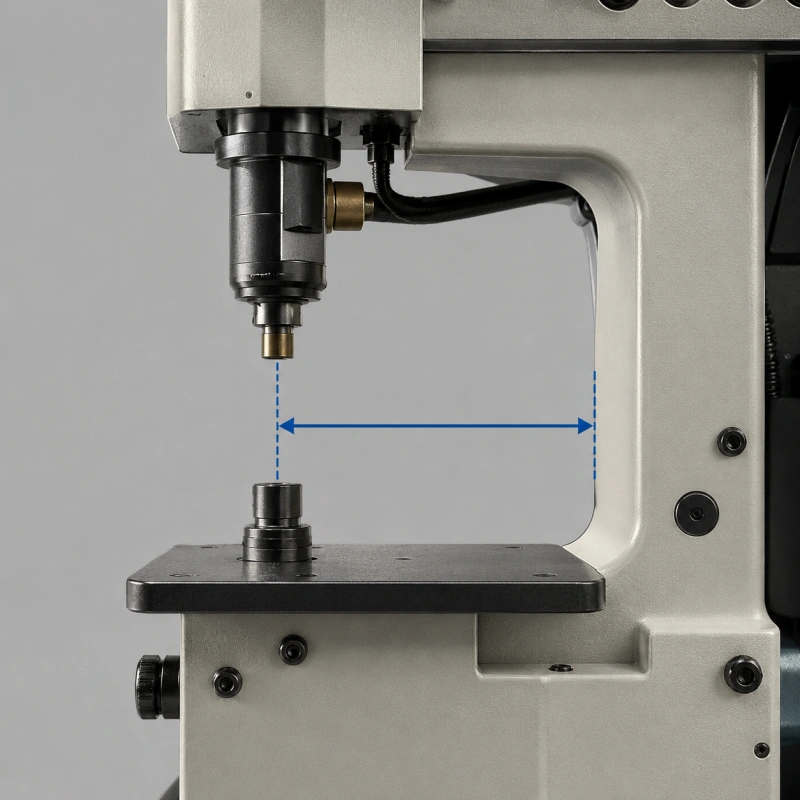
You need to know the exact spot where you can place an eyelet on your material. The eyelet machine throat depth gives you this measurement. It is the horizontal distance from the center of the punching die to the vertical frame of the machine. This distance tells you how far from the edge you can punch an eyelet.
If you work with banners, tarps, or even small tags, this measurement helps you plan your project. You can choose a machine with a throat depth that matches your material size and design needs.
When you look at different machines, you will see a range of throat depths. Some machines have a shallow throat, which works well for small items like tags or garment edges. Others have a deep throat, which lets you reach further into large materials.
You can find machines with adjustable throat depths, which give you more flexibility for different projects. The right eyelet machine throat depth helps you achieve clean, professional results.
Why Throat Depth Matters?
The throat depth of your eyelet machine affects what you can create. If you pick a machine with the right depth, you can handle a wide range of materials and project sizes. You avoid problems like poor placement or damaged materials. For industrial use, the right throat depth becomes even more important.
Tip: Always check the throat depth before starting a new project. This step saves you time and prevents mistakes.
If you use a machine with a shallow throat for large materials, you may face several issues:
- You cannot reach the center of wide banners or tarpaulins.
- Production slows down because you need to reposition the material many times.
- Using a standard 200mm throat machine for large tarpaulins can lead to regret during big orders.
- Treating thick materials like tarpaulin or PVC sheets as if they were fabric can result in poor-quality eyelets and unhappy customers.
Choosing the correct eyelet machine throat depth ensures you can work efficiently. You place eyelets exactly where you want them, even on bulky or wide materials. This choice improves your workflow and helps you deliver high-quality products every time.
Understanding Eyelet Machine Throat Depth
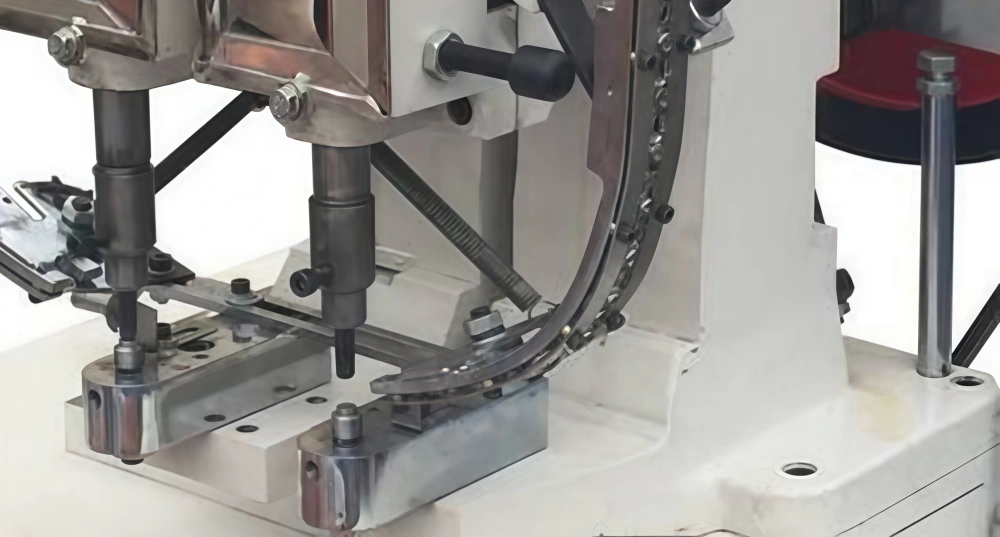
How Throat Depth Affects Projects?
You need to match your machine’s throat depth to your project’s size and material. The throat depth controls how far you can reach into your material to place an eyelet. If you work with small items like tags or garment edges, a shallow throat depth works well.
For large banners, tarps, or curtains, you need a deeper throat to reach the center or further from the edge.
A larger throat depth gives you more flexibility. You can process bigger workpieces without folding or damaging the material. You also get better machine stability when handling heavy or bulky items. The working range of the press increases as the throat depth grows.
This means you can install dies for larger materials and complete projects that would be impossible with a shallow machine.
QC Machinery offers a variety of options to fit your needs:
- Pneumatic eyelet machines with throat depths from 45mm to 130mm.
- Models like QC09213 and QC16002, both with a throat depth range of 45-130mm.
- For curtain production, you may need a throat depth of at least 850mm for a 1.6-meter curtain.
Tip: Choose a machine with a throat depth that matches your largest material. This decision saves time and prevents mistakes during production.
Edge Distance and Material Size
The edge distance is the space from the edge of your material to the center of the eyelet. The eyelet machine throat depth sets the maximum edge distance you can achieve. If you want to place eyelets far from the edge, you need a machine with a deep throat.
The size and type of material also affect your choice. Thicker or bulkier materials require more space for proper die installation. You must consider both the width of your material and the desired eyelet position.
Here is a quick reference for recommended throat depths for common materials:
| Material | Throat Depth |
|---|---|
| Leather | 5.5″ |
| Canvas | 5.5″ |
| Plastic | N/A |
You can see that leather and canvas often need a throat depth of 5.5 inches (about 140mm). For plastic, the requirement depends on the project.
- Throat depth affects the working range of your machine.
- It determines the die installation space, which is crucial for larger materials.
- A larger throat depth improves machine stability and lets you handle bigger workpieces.
QC Machinery’s adjustable and customizable machines help you match the throat depth to your specific needs. You can process everything from small tags to wide banners and curtains. This flexibility ensures you always get precise and professional results.
Measuring Throat Depth
Measurement Steps
You need to measure the throat depth of your eyelet machine to ensure accurate eyelet placement. Start by turning off the machine and unplugging it for safety. Always wear cut-resistant gloves during this process. Place your material on the machine bed as you would during normal operation.
Use a ruler or caliper to measure the horizontal distance from the center of the punching die to the inside edge of the machine’s vertical frame. This distance is your throat depth.
Follow these steps for the best results:
- Power off and unplug the machine.
- Put on cut-resistant gloves.
- Place a sample material on the machine bed.
- Locate the center of the punching die.
- Measure from the die center to the vertical frame using a ruler or caliper.
- Record the measurement and verify it matches your project needs.
Tip: Always check that your measured throat depth matches the actual working range, not just the machine’s listed maximum. Real-world testing helps prevent errors.
Safety should always come first. The table below highlights important safety considerations when measuring throat depth:
| Safety Consideration | Description |
|---|---|
| Throat Depth Verification | Confirm throat depth measurements match real-world testing—not theoretical maxima |
| Personal Protective Equipment | Always wear cut-resistant gloves during maintenance. |
| Safety Mechanisms | Two-hand operation controls reduce finger injuries by 73% compared to foot-pedal models. Check for finger guards and emergency stop buttons on electric units. |
Tools for Measuring
You can use several tools to measure throat depth accurately. A standard steel ruler works for most machines. For higher precision, use a digital caliper. Some users prefer a tape measure for larger machines. Always choose a tool that fits comfortably between the die and the frame.
- Steel ruler: Simple and effective for quick checks.
- Digital caliper: Offers precise measurements, ideal for tight spaces.
- Tape measure: Useful for deep-throat or industrial models.
Note: Clean your measuring tools before use to avoid inaccurate readings. Store them in a safe place after each use.
By following these steps and using the right tools, you ensure your eyelet machine delivers consistent, professional results every time.
Choosing the Right Eyelet Machine Throat Depth
Project and Material Considerations
You need to match your eyelet machine throat depth to your project requirements. Start by looking at the size and type of materials you use most often. If you work with small items like tags, a standard throat depth will usually meet your needs.
For larger projects, such as banners, curtains, or tarpaulins, you need a deeper throat to reach further from the edge.
Think about the thickness and flexibility of your materials. Thick or bulky materials require more space for proper die installation. If you plan to place eyelets far from the edge, make sure your machine can handle the distance. Adjustable throat depth features help you process different curtain widths without moving the fabric.
This flexibility is important in high-volume production, where you may work with many sizes each day.
Tip: Measure your largest material and decide how far from the edge you want to place the eyelet. This step helps you choose the right machine and avoid production delays.
QC Machinery Eyelet Machine Options
QC Machinery offers a wide range of machines to fit your needs. You can choose from standard models or request custom solutions. QC Machinery adjusts the frame of its machines to customize throat depth options. This modification gives you more reach when the standard throat depth does not meet your requirements.
Here are some options you can consider:
- Adjustable throat depth models for flexible production
- Machines with throat depths from 45mm to 130mm for small to medium projects
- Deep-throat machines for large banners, curtains, or tarpaulins
- Custom-built machines for unique production needs
| Model Name | Throat Depth Range | Best For |
|---|---|---|
| QC16002 Fully Automatic Plastic Eyelet | 45mm – 130mm | Garments, banners, cards |
| QC54222 Semi-automatic Eyelet Punching | 150mm | Banners, cards, medium fabrics |
| QC1805A Curtain Eyelet Punching Riveting | 65mm | Curtains, drapes |
You can contact QC Machinery for advice or to request a custom machine. Their team will help you select the best model for your specific needs.
Common Throat Depth Ranges
Standard and Deep-Throat Models
You will find eyelet machines with throat depths that fit many project types. Standard models usually offer throat depths from 50 mm to 150 mm. These machines work well for small items like tags, garment edges, and cards. You can use them for projects where you need to place eyelets close to the edge.
Deep-throat models give you a throat depth from 150 mm to over 400 mm. These machines handle larger materials such as banners, tarpaulins, curtains, and industrial canvas. You can reach further into the material without folding or damaging it.
Deep-throat machines help you place eyelets in the center or away from the edge.
Note: QC Machinery provides both standard and deep-throat models. You can also request custom throat depths for unique projects.
Here is a quick comparison:
| Model Type | Throat Depth Range | Typical Applications |
|---|---|---|
| Standard | 50 mm – 150 mm | Tags, garments, cards |
| Deep-Throat | 150 mm – 400+ mm | Banners, tarps, curtains |
Best Uses for Each Range
You need to match the throat depth to your project. Standard models suit jobs where you place eyelets near the edge. You can use them for clothing, bookbinding, and small signage. These machines offer easy handling and quick setup.
Deep-throat models fit large-scale projects. You can use them for wide banners, tarpaulins, and curtains. These machines let you place eyelets far from the edge. You avoid material damage and improve production speed.
- Standard throat depth: Best for small, edge-focused tasks.
- Deep-throat depth: Ideal for bulky, wide, or rolled materials.
Tip: Choose a machine based on your largest material and the eyelet placement you need. This step ensures you get clean, professional results.
🛠️ You can contact QC Machinery for advice on selecting the right throat depth. Their team helps you find a model that fits your workflow and material size.
Conclusion
You gain better results when you understand the eyelet machine throat depth. You match your machine to your project and avoid mistakes. QC Machinery offers many options for different materials and sizes.
- Explore their product range for the best fit.
- Ask their team for expert advice or custom solutions.
Choosing the right throat depth improves your workflow and helps you deliver professional results every time.
FAQ
What is throat depth on an eyelet machine?
Throat depth measures the horizontal distance from the punching die’s center to the machine’s frame. You use this measurement to determine how far from the edge you can place an eyelet.
How do you choose the right throat depth for your project?
You should measure your largest material and decide where you want the eyelet. Select a machine with a throat depth that matches your needs. Deep-throat models work best for wide or bulky materials.
Can you use a deep-throat eyelet machine for small items?
Yes, you can use a deep-throat machine for small items. You gain flexibility and can handle both small and large materials without changing machines.
Tip: Deep-throat models help you avoid material damage during large projects.
What materials can QC Machinery eyelet machines handle?
QC Machinery machines work with fabric, leather, tarpaulin, banners, curtains, and cards. You can process thin or thick materials with the right model.
| Material | Compatible Machine |
|---|---|
| Fabric | Standard/Deep |
| Tarpaulin | Deep-Throat |
| Cards | Standard |